



Como varias editoriales se encuentran en el mismo país (o incluso en la misma ciudad), es necesario ampliar el país o la ciudad que le interesa para ver todas las editoriales.


 Yomad
Yomad
28, rue Dayat Aoua
Agdal
10000 Rabat
Marruecos
Tél: (+212) 53 7 68 64 30
www.yomadeditions.net
Yomad nace a fines de 1998. Es una pequeña editorial especializada en los libros para niños y jóvenes. Pequeña por sus medios, pero grande por sus ambiciones, es la prueba de las pocas creaciones locales en materia de literatura para la juventud.
Es cierto que los libros para niños “made in lejos” llenan las estanterías de nuestras librerías, libros cuyas referencias son totalmente extranjeras a la cultura y el entorno del niño marroquí. Sin embargo, todos los niños necesitan para construirse plantar raíces en sus propias referencias para vivir de acuerdo con la sociedad. Con esta óptica, se dibuja el principal objetivo de Yomad.
En marzo de 1999, se publicó una primera colección «Mini Yemma» de tres libros firmados por Driss Chraïbi, además de una segunda colección denominada «Yemma», compuesta por dos libros firmados por Habib Mazini. El hecho de contar con Driss Chraïbi como autor destacado del catálogo permitió a Yomad ganar un tiempo considerable y darse a conocer. Siguió Zaïna et le fils du vent que tuvo un gran éxito con los jóvenes lectores. Recibió el premio de los liceos Grand Atlas de 2001. A pedido de los niños, se editó un segundo tomo Le défi de Zaïna.
El catálogo Yomad cuenta hoy con 10 colecciones que incluyen 40 libros. Las colecciones «Hikayat», «Mini-Yemma», «Mini-Yemma roman», «Yemma», «Contes du Maroc», «Rêves d’enfants», «Yemma junior», «Raconte-moi l’Histoire», «Mini-plume» y «Nostalgie».
Nombres prestigiosos de la literatura marroquí y argelina firmaron con su pluma varios libros como es el caso de Driss Chraïbi, Fouad Laroui, Abdellatif Laâbi, Abdelhak Serhane, Zakya Daoud, Mohamed Dib y otros menos conocidos como Jocelyne Laâbi, Habib Mazini, Mehdi Degraincourt, Ouadia Bennis, Charlotte Bousquet, Véronique Abt, Dominique Logié, Françoise Chémaô, Christian Devèze, Zidrou, Samia Benatya, Keltoum Mosdik, Majid Al Amiri, Florence Deville-Patte. Los ilustradores que con talento acompañaron los textos de las obras son Nathalie Logié, Alexis Logié, Virginie Soumagnac, Abdellatif Mitari, Moshine Drissi, Saïd Boucetta, Karim Yahia, Noureddine Lahrech, Tasneem Allouch, Carole Gourat, Saïd Oumouloud, Jean-Paul Favreau, Pierre Léger y Orélie Gouel.
Je suis partie de « nomade » car pour moi, l’éditeur, l’écrivain, le lecteur, le livre sont tous des nomades. Le nom n’a pas été accepté, car il existait déjà. J’ai juste retiré le N et je l’ai remplacé par Y. Je trouve que Yomad a une belle sonorité.
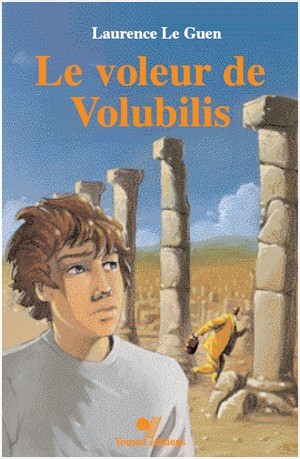
Laurence
LE GUEN - illustrations d’Anthony COCAIN
Lorsque Briac et Maëlle posent leurs pieds sur le sol marocain, ils
sont loin de se douter que ce qui devait être un paisible voyage
jusqu’à Marrakech, va se transformer en une course poursuite après un
étrange individu. Que trafique-t-il à la tombée de la nuit dans les
ruelles de Tanger ? Que cherche-t-il dans les ruines de Volubilis ?
D’autant qu’il semblerait que les enfants ne soient pas tout seuls sur
les traces de cet homme...
À partir de 9 ans
2009 - 114 pages en noir & blanc -
12 x 18 - ISBN: 978-9954-0-0077-1

Mohammed
DIB - illustrations de Virginie SOUMAGNAC
Bilingue arabe / français
Il y a bien longtemps, un méchant sorcier était servi par un petit
garçon du nom de Salem. Un jour, le sorcier entendit quelqu’un frapper
à la porte de sa maison. Il ordonna à Salem d’aller ouvrir. Ce dernier
refusa. Quelle fut sa punition ?
Collection Hikayat - à partir de 4 ans
2003 - broché, 28 pages -
18 x 19 - ISBN: 9954-0-0040-2
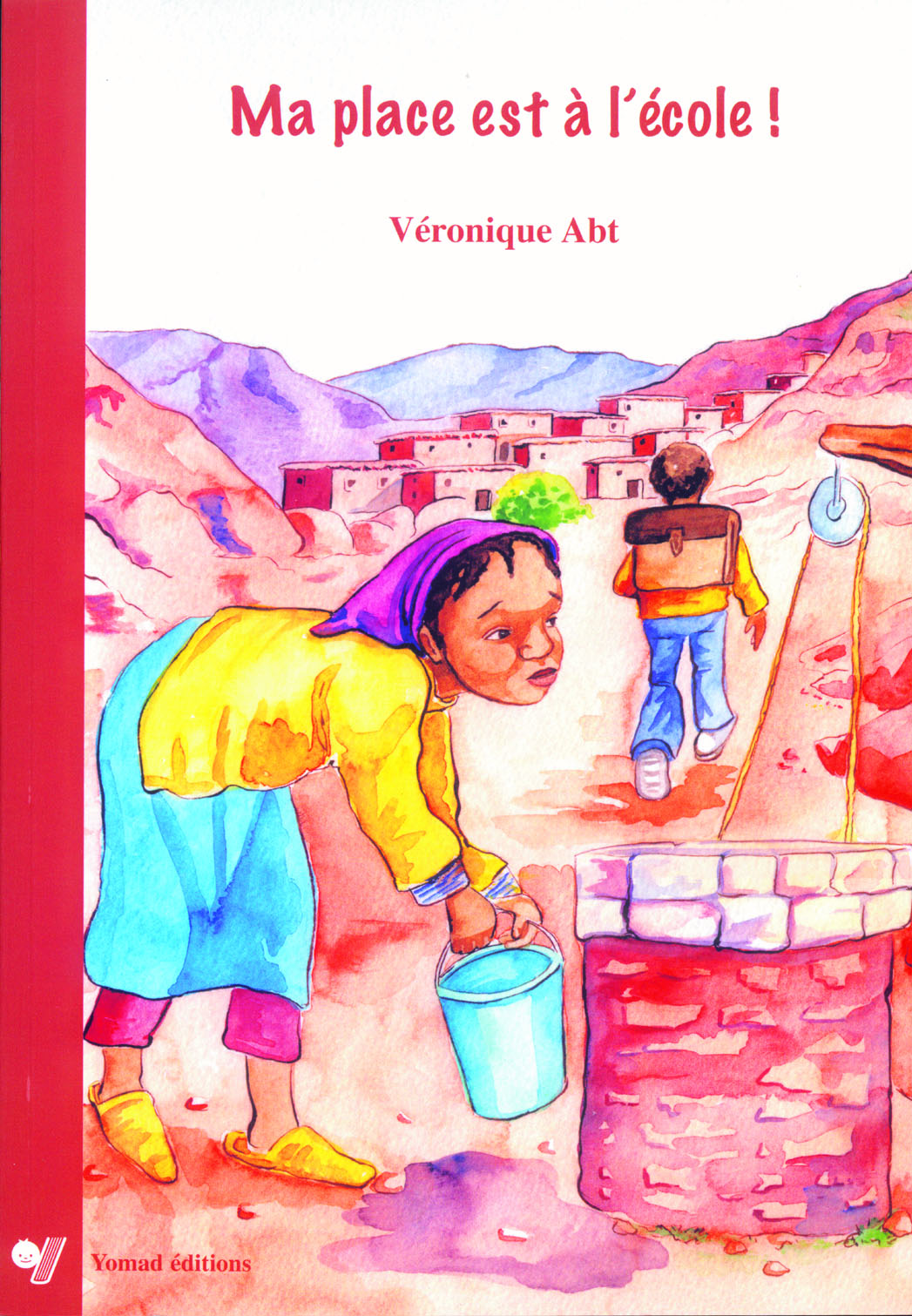
Véronique ABT
Aïcha vit dans un village au Sud du Maroc. Tous les jours, elle regarde, avec envie, les enfants qui se dépêchent sur le chemin de l’école. Elle aimerait bien y aller aussi, mais elle doit aider sa maman à faire le ménage, laver le linge, aller chercher l’eau au puits...
Aura-t-elle une place à l’école un jour ?
Collection Rêves d’enfants - à partir de 7 ans
2005 - 40 pages en couleurs - 17 x 24 - ISBN : 9954-0-0061-5
 Contacto : Nadia ESSALMI
Women Unlimited
7/10, First Floor, Sarvapriya Vihar
New Delhi 110 016
India
Tél: (+91-11) 2652 4129 / (+91-11) 2686 6596
www.womenunlimited.net
Women Unlimited es una asociación de Kali for Women, la primera y más antigua editorial feminista, que publica libros escolares y universitarios en ciencias sociales, ficción, obras no ficticias de interés general, autobiografías, reminiscencias y memorias, historias orales, libros para jóvenes adultos, panfletos y monografías, así como material de activismo. El catálogo de Kali for Women/Women Unlimited combina lo mejor de los títulos publicados por Kali entre 1984 y el 2004, y una apasionante gama de libros y autores encargados por Women Unlimited. Nos proponemos continuar toda la actividad editorial de Kali for Women. Hemos seleccionado títulos publicados con Kali, exploramos nuevos temas, anticipamos tendencias, desarrollamos nuevas perspectivas, y ofrecemos lo mejor de la erudición feminista, material de activismo y escritura creativa, a precios abordables.
Women Unlimited tiene vínculos estrechos con el movimiento de las mujeres y los estudios feministas en India, Asia del Sur, e internacionalmente. Participamos en campañas, a niveles nacional y regional, y nos hemos involucrado extensamente en temas que tienen que ver con medios de comunicación alternativos, escritura de mujeres, y censura basada en criterios de género. Consideramos todo esto solo como una extensión de nuestra actividad editorial.
Women Unlimited es miembro activo del Grupo de editores independientes (Independent Publishers’ Group - IPG), un colectivo de 10 editoriales ubicadas en Delhi, formado en marzo de 2005. Con 8 de nuestros socios, también creamos las Alternativas de distribución para los editores independientes (Independent Publishers’ Distribution Alternatives - IPD Alternatives), que se encargan de la distribución de los títulos publicados por cerca de 20 editoriales independientes.
Leer aquí las entrevistas con Ritu Menon:

Climate Change, Peak Oil, and Food Insecurity - by Vandana Shiva
«One of the world’s most prominent radical scientists.»
—The Guardian
«The South’s best-known environmentalist.»
— New Internationalist
CLIMATE CHANGE will dramatically alter how we live and is already affecting the lives of the world’s most vulnerable people.
In Soil Not Oil, bestselling author Vandana Shiva connects the food crisis, peak oil, and climate change to show that a world beyond a dependence on fossil fuel and globalization is both possible and necessary. Bold and visionary, Shiva reveals how three crises are inherently linked and that any attempt to solve one without addressing the others will get us nowhere.
Condemning industrial agriculture and industrial biofuels as recipes for ecological and economic disaster, Shiva’s champion is the small, independent farm. What we need most in a time of changing climates and millions hungry, she argues, are sustainable, biologically diverse farms that are more resistant to disease, drought, and flood. Calling for a return to local economies and small-scale food production, Shiva outlines our remaining options; a market-centred shortterm escape for the privileged, which will deepen the crisis for the poor and marginalized, or a people-centred fossil-fuel-free future, which will offer a decent living for all.
Vandana Shiva is a world-renowned environmental thinker and activist. A leader in the International Forum on Globalization (IFG) along with Ralph Nader and Jeremy Rifkin and the Slow Food movement. Shiva won the Alternative Nobel Prize (the Right Livelihood Award) in 1993. She is the author of many books, including Manifestos on the Future of Food & Seed (2007), and Globalization’s New Wars: Seed, Water & Life Forms (Women Unlimited, 2005). Before becoming an activist, Vandana Shiva was one of India’s leading physicists.
May 2009 - 164 pages - paperback - Rs. 225 - ISBN: 978-81-88965-55-3
Sexual Economies in Contemporary Bombay Cinema - by Karen Gabriel
This insightful analysis of popular Bombay cinema presents a comprehensive discussion of its contemporary history, background, financing and social and political underpinnings. It maps the cultural landscape of this medium, tracing the relationship between the state, cinema and society. It reviews the ways in which gender and sexuality are articulated in the organisation of images, and demonstrates how heterosexuality operates as a stabiliser within this constellation. More generally, it looks at the emergence of heroes and anti-heroes, at the changing faces of masculinity, at femininity and the regulation of desire, and at Bollywood’s construction of gender, sexuality and the nation.
Karen Gabriel is currently Fellow, Centre for Women’s Development Studies, New Delhi. She has taught at St. Stephen’s College, University of Delhi, and works on issues of gender and sexuality.
350 pages - paperback - Rs. 450 - ISBN: 81-88965-49-9

Edited by
Samir Kumar Das & Rada Ivekovic
Terror has had different philosophies in history; and philosophies have their own engagement with terror. Can these two realities be judged historically? The question is important not only because today’s world is marked by different kinds of terror – individual, state, anarchist, revolutionary, religious, communal, but that these have different ideological and philosophical justifications which must be understood in their differential particularities, especially when these particularities are sought to be obliterated by the use of the term, ‘terrorism’, and its perceived practitioners as ‘terrorists’.
This book includes papers on important issues such as: terror as historical event; terror as a generalised discourse of ideology; terror as a feature in the continuum of violence; terror as ‘extreme violence’; war on terror, and the need for legitimacy; race, gender, difference, and the instruments of colonial terror; the early nationalists as the early terrorists; post-colonialism, societies, and terror; terror as the final marker of identity ascribed, undertaken, imposed; Enlightenment on terror and Philosophy’s engagement with terror.
The contributors include well-known international academics and philosophers: Artemy Magun; Ivaylo Ditchev; Stephen Wright; Daho Djerbal; Ranabir Samaddar; Didier Bigo; Paula Banerjee; Virgilio Alfonso da Silva; Pradip Kumar Bose; Alain Brossat, Samir Kumar Das; Shahnaz Rouse; Bechir Chourou; Boyan Manchev; and Francisco Naishtat. The editors are Samir Kumar Das, Professor at Calcutta University, political scientist, and author and editor of many publications; and Rada Ivekovic, Professsor of Philosophy and Programme Director at the Collège international de philosophie, and has written several books.
October 2009 - 300 pages - ISBN: 81-88965-56-1
 Contacto : Ritu MENON
Tulika Books
No. 44, First Floor
Shahpur Jat
New Delhi 110 049
India
Tél: Tél: (+91-11) 2649 7999 / (+91-11) 4617 0894
www.tulikabooks.in
Tulika es una editorial independiente localizada en Delhi, India. Somos especializados en libros de ciencias humanas y sociales. Activos hace más de 10 años, hemos publicado más de 70 títulos, logrando publicar los trabajos de profesores reconocidos en sus disciplinas : historia, economía, sociología, literatura, ciencia política.
Tulika es miembro del Grupo de editores independientes (Independent Publishers’ Group - IPG), un colectivo de 10 editoriales ubicadas en Delhi, formado en marzo de 2005. Con 8 de nuestros socios, también creamos las Alternativas de distribución para los editores independientes (Independent Publishers’ Distribution Alternatives - IPD Alternatives), que se encargan de la distribución de los títulos publicados por cerca de 20 editoriales independientes.
Escuchar aquí la entrevista de Indira Chandrasekhar - por Frederick Noronha durante el taller ’Spreading the Word: Copyright, Dissemination and Independent Publishing’ organizado por el colectivo Independent Publishers’ Distribution Alternatives (IPDA) en colaboración con Alternative Law Forum, 24-25 de junio de 2010, Bangalore.
 Contacto : Indira CHANDRASEKHAR
Vents d’ailleurs
11, route de Sainte-Anne
13640 La Roque d'Anthéron
Francia
Tél: +33 (0)4 42 50 59 92
www.ventsdailleurs.com
Vents d’ailleurs (Vientos de otros lados) es un editor independiente que publica literatura, libros para niños (ficción y documental) y libros de arte. Creado en Fort-de-France, hoy en día instalado en el Sur de Francia, su producción trata de establecer pasarelas entre los lectores del Norte y los modos de expresión artísticos y literarios del Sur. Su política editorial zarandea los prejuicios de visión del otro a través del prisma de las cultures dominantes y contradice los imaginarios familiares. Ella se construye sobre el recelo del enfoque evidente de la racialidad. Obra tras otra, Jutta Hepke y Gilles Colleu combaten las representaciones desdeñosas y simplistas, apoyandose en la convicción de que una nueva escritura de la historia de los pueblos es una necesidad absoluta. Reconocido por la calidad de su producción editorial y su línea gráfica original, Vents d’ailleurs establece también convenios con editores del Sur. Vents d’ailleurs es miembro de la Alianza de los editores independientes y de la asociación Editores sin fronteras. Vents d’ailleurs es distribuido en Haití por Communication Plus y en Canadá por Dimedia.
 Contacto : Jutta HEPKE
 Responsable : Gilles COLLEU
Éditions du Silence
292, avenue du Colonel Parant
BP 13822 Libreville
Gabón
www.afrilivres.net
Sociedad de responsalidad limitada, creada en 1996 en Libreville para la concepción, la edición, la difusión y la distribución de obras del ingenio humano, la editorial du Silence (del Silencio) empezó publicando revistas científicas de la universidad de Libreville antes de lanzarse en la publicación de ensayos, de relatos de vida, de memorias y textos de la cultura tradicional. En el 2005, se extiende a la ficción y confirma su arraigamiento en el medio escolar y universitario y, más ampliamente, en el mundo de las ideas para compartir mejor nuestro espacio común: la Tierra.
 Contacto : Auguste MOUSSIROU-MOUYAMA
Sankofa & Gurli Éditions
01 BP 3811
Ouagadougou 01
Burkina Faso
Tél: (+226) 78 72 98 00
https://www.facebook.com/profile.php?id=100032450452277
Sankofa & Gurli Éditions es una editorial de Burkina Faso creada en 1995. Al ser fundada, se planteó como objetivos los siguientes: promover la literatura actuando en planos diversos y complementarios como la escritura (apoyo y seguimiento a los autores), la lectura (comunicación seguida con el público), la producción y la difusión ; promover y revalorizar las lenguas africanas, en particular las que se hablan en Burkina Faso y las lenguas transnacionales, a través de una política editorial que evita poner al margen la edición en lenguas africanas (estética de la forma y de los contenidos, temáticas, circulación de las publicaciones…); promover una literatura de calidad con costes correspondientes al poder adquisitivo local; obrar para que nazca en los niños y los jóvenes el placer de la lectura y de la escritura, y establecer en ellos, lo más temprano posible, hábitos de producción y de consumo de lo escrito; de forma general, contribuir en la promoción, el desarrollo y el fortalecimiento de la cultura, sobre todo literaria, en un contexto de analfabetismo generalizado.
Desde 1999, se diversificaron los contactos, se fortaleció y se amplió el compromiso: Sankofa & Gurli Éditions participa con varios socios (africanos, europeos, norteamericanos) en proyectos de coedición. Miembro de la Alianza internacional de los editores independientes, la editorial contribuye al debate sobre y a la lucha por bibliodiversidad, solidaridad en independencia de las editoriales del mundo entero.
Le nom de la maison d’édition est double. SANKOFA est le nom de l’oiseau qui, dans la cosmogonie des peuples AKAN, symbolise la conscience historique. Son slogan est « Il n’y a pas de honte à revenir sur ses pas pour prendre ce qu’on a perdu/oublié en cours de chemin ». GURLI est le nom du hérisson en gulmancema. Il symbolise aux yeux du fondateur de la maison d’édition l’ingénuité enfantine et le caractère absolu de la liberté des idées. On racontait souvent aux enfants qu’il était impossible de garder prisonnier un hérisson. Toutes les tentatives par ces enfants d’en enfermer un se révélaient vaines, le hérisson disparaissait toujours de sa prison. Bien des années plus tard, l’enfant que j’étais (suis ?) a appris que c’étaient nos aînés qui libéraient le petit animal. Ainsi en est-il des idées : on a beau les enfermer, les emprisonner, il se trouvera toujours un moyen, une personne, une circonstance, qui les libérera...
 Contacto : Jean-Claude NABA
Mémoire d’encrier
1260 rue Bélanger, Bureau 201
H2S 1H9 Montréal (Québec)
Canadá
Tél: (+1-514) 989 1491
www.memoiredencrier.com
Fundada en marzo de 2003 Montreal por el escritor Rodney SAINT-ÉLOI, Mémoire d’encrier es una impresa de edición. Publica obras de ficción : romances, cuentos, novelas, poesía, ensayos, testimonios. Mémoire d‘encrier propone un catálogo diversificado que crea puentes entre culturas e imaginarios del Norte y del Sur. Dandose como objetivo la promoción de los autores y obras de los espacios francófonos, Mémoire d’encrier trabaja a partir de un corpus de más de cien textos de autores canadienses, quebequeses, amerindios, caribeños, africanos y europeos. Lo esencial es rechazar la exlusión y formar pasarelas que ayuden a reconsiderar la cuestión del Otro en nuestras sociedades modernas.
Mémoire d’encrier : enraciner l’encre (l’écrit) dans le patrimoine oral. Associer la mémoire à l’écrit ; associer en ce sens littérature (écrits) et oraliture (traditions orales) ; assumer la continuité entre mémoire et modernité.

Jean FLORIVAL
Spectateur et souffleur, Jean Florival est dans l’œil du cyclone; à l’intérieur du régime, sans un quelconque titre officiel. C’est en témoin privilégié qu’il plonge dans l’intimité du pouvoir, relate des faits jusque-là inconnus du grand public. Ce livre a le mérite d’exposer avec sérénité des événements tantôt tragiques, tantôt loufoques, dans le dessein de refuser l’oubli, et de mieux comprendre cette tyrannie qui a endeuillé les familles haïtiennes, afin de sortir du cercle de l’impunité et de la logique bourreaux-victimes. Découvrez les frasques d’un pouvoir qui fige depuis un demi-siècle l’histoire et l’imaginaire d’Haïti.
Jean FLORIVAL est né en 1930 en Haïti. Journaliste, proche du régime duvaliériste, il a fréquenté le milieu du pouvoir haïtien. Ami et conseiller de ministres et de dignitaires du régime de 1957 à 1967. Se sentant menacé, il choisit l’exil en 1967, et part à New-York, puis s’installe en 1973 au Québec, où il a travaillé dans l’enseignement. Il partage son temps aujourd’hui entre la lecture, les conférences et l’écriture.
2008 - 29,95 $CAN - ISBN : 978-2-923153-92-6 - collection «Chroniques»
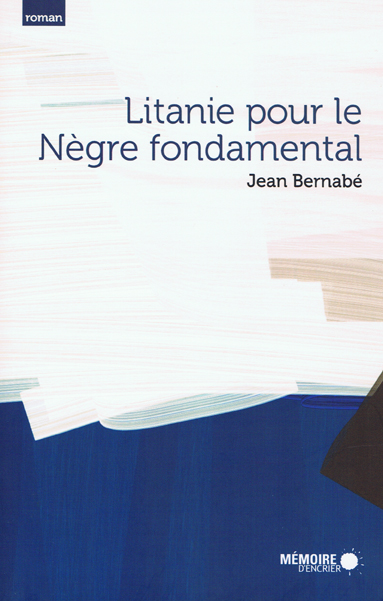
Jean BERNABÉ
Une dizaine de personnages, hauts en couleurs, issus de différents milieux sociaux et castes de la Martinique, sont mis en scène. Tous ces personnages, bigarrés, cocasses, hilarants, tournent sous le couvert d’un mouvement écologiste militant pour le changement social et se renvoient intrigues et hostilités. Le narrateur, pour différentes raisons, est l’objet de toutes les menaces. Jalousies, amertumes, ressentiments – mais aussi naïveté, trait d’esprit et générosité – servent de marqueurs à ces récits.
Jean BERNABÉ est né au Lorrain en Martinique en 1942. Écrivain et linguiste, il est le co-fondateur avec Patrick Chamoiseau et Raphaël Confiant du mouvement littéraire « La Créolité ». Il a été durant plusieurs années le Doyen de la Faculté des Lettres et Sciences Humaines de l’Université des Antilles et de la Guyane.
En 1983, il publie «Fondal Natal», la première thèse de Doctorat sur le créole antillais. En 1989, il signe avec Chamoiseau et Confiant, l’important manifeste Éloge de la créolité. Il participe ensuite à la reconnaissance du créole dans le milieu universitaire et scolaire par l’intermédiaire de la création du CAPES de créole. Fondateur du GEREC-F (Groupe de recherches et d’études en espace créole et francophone), il est l’auteur d’importants ouvrages dans le domaine de la syntaxe du créole, ainsi que de nombreux articles de sociolinguistique et de littérature.
2009 - 24,95 $CAN - ISBN : 978-2-923713-01-4 - collection «Roman»
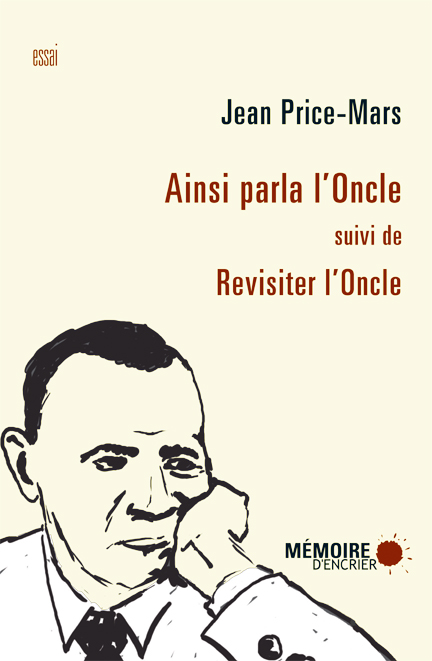
Jean PRICE-MARS
«Ainsi parla l’Oncle» est le premier manifeste de la condition noire. Paru pour la première fois en 1928, l’ouvrage a influencé l’œuvre et la pensée des auteurs du mouvement de la négritude comme Léopold Sédar Senghor, Aimé Césaire et Léon-Gontran Damas.
«Ainsi parla l’Oncle» est suivi du collectif Revisiter l’Oncle qui réévalue les incidences et résonances de cette œuvre dans le monde entier. Revisiter l’Oncle accueille les textes de Maryse Condé, Dany Laferrière, Jean-Daniel Lafond, Raphaël Confiant, André Corten, Jean Bernabé, Léon-François Hoffmann, Maximilien Laroche, Jean Morisset, et bien d’autres.
Réédité dans un nouveau format, avec une iconographie nouvelle (paysages et figures de l’Afrique et d’Haïti), l’ouvrage propose une relecture de cette œuvre monumentale qui a servi de bréviaire aux intellectuels des peuples noirs. Pour penser le monde, pour comprendre les mécanismes de l’aliénation, soit du «bovarysme culturel», Jean Price-Mars a mis en avant les traditions, les légendes populaires, le vaudou et tout l’héritage africain qui fondent les cultures noires.
2009 - 39,50 $CAN - ISBN : 978-2-923713-03-8 - collection «Essai»
 Contacto : Rodney SAINT-ÉLOI
Les éditions de l’Atelier
51-55 rue Hoche - Bât. B - Hall 1 - étage 3
94200 Ivry-sur-Seine
Francia
Tél: +33 (0)1 45 15 20 20
www.editionsatelier.com
La globalización, las nuevas tecnologías de la información y de la comunicación, la individualización conmocionan radicalmente las maneras de vivir, de trabajar, de pensar y de creer. Con el propósito de contribuir a volver esta mutación más humana, favoreciendo la reconstitución del lazo social y permitiendo que las personas de medios populares puedan volverse los autores de su propia vida, la editorial de l’Atelier (del Taller) publican libros dentro de tres campos: el cristianismo, las culturas y religiones, las ciencias humanas y sociales.
Siguiendo la tradición de las editoriales obreras, la editorial de l’Atelier, creada por la Juventud obrera cristiana en 1929, quiere promover obras que crucen diferentes conocimientos, los que vienen de la experiencia asi como los que resultan del trabajo teórico, con el propósito que el libro sea un instrumento de emancipación de las personas y de enriquecimiento del lazo social para la mayoría de la gente.
 Contacto : Gaëlle BIDAN
Metis Publishers
Ipek Sokak 5, 34433 Beyoglu
Istanbul
Turquía
Tél: +(90-212) 245 46 96
www.metiskitap.com/catalog/metisbooks
Metis Publishers fue fundada en 1982 y se estableció como una de las editoriales líderes, reconocida por defender su espíritu independiente y su compromiso radical, celebrando el pensamiento crítico, el talento original y aportando literatura mundial de calidad a generaciones de lectores turcos. Con más de 800 libros en su catálogo, Metis es famosa por sus traducciones cuidadosas y su integridad editorial.
Su catálogo incluye ambos ficciones y documentales, especializandose en literatura de calidad y teoría crítica. Algunos de los autores publicados en traducción son Ursula K. LeGuin, Marguerite Yourcenar, Salman Rushdie, Henry Bauchau, Georges Perec, John Berger, J.R.R. Tolkien y Maurice Blanchot. Trabajos de autores turcos tan distinguidos como Murathan Mungan y Bilge Karasu también fueron publicados por Metis.
Metis publicó también obras documentales interdisciplinarias relevantes en el clima cultural de Turquía desde una perspectiva política radical, como las de Walter Benjamin, Max
Horkheimer, Theodor Adorno, Edward Said, Immanuel Wallerstein, Emile Cioran, Slavoj Zizek, Judith Butler, Nurdan Gürbilek y Nilüfer Göle. Especialistas de teoría literaria de ámbito mundial como Gyorgy Lukacs, Tzvetan Todorov y Mikhail Bakhtin, filósofos como Paul Ricoeur, Ludwig Wittgenstein y Roland Barthes y maestros de la psicoanálisis como Sigmund Freud, Anna Freud, Melanie Klein y Heinz Kohut también hacen parte de los autores publicados por Metis en Turquía.
Metis was the Goddess of Wisdom, first wife of Zeus, before he swallowed her up when she was pregnant and gave “birth” through his forehead to the next Goddess of Wisdom, Athena, who was “born from a man, fully armed”, whereas Metis was against the use of arms, worked with the knowledge of nature and used the skill of the craftsperson to solve disputes, like a captain navigating rocky waters.
Hence metis came to signify the “knowledge that the Power detests”, in addition to nobody, bastard, craftiness...

Cultural Climate of Turkey
by Vitrinde Yaşamak (1992) and Kötü Çocuk Türk (2001)
A collection of essays on Turkey’�s cultural climate in the last decades from a most insightful literary and cultural critic. The first two essays of this collection, «Life in the Shop Window» and «Return of the Repressed», attend to the 80�’s � a period of radical economic, political and cultural change following the coup d�état of 1980. Nurdan Gürbilek argues that this was not only a period of oppression of speech but also a period of explosion of speech; an incitement to speech. A period when two seemingly opposed cultural strategies, the old one of repression, forbiddance and annihilation and the new one of provocation, assimilation and incorporation came together, weaving a cultural fabric that had significant results in shaping the cultural climate of modern Turkey. Gürbilek also argues that this was a period of cultural pluralism� - a result of the collapse of the modern Kemalist identity. Years of the «return of the repressed»; the voices that were previously repressed by the Kemalist project of modernization, the voices of the Islamic and Kurdish opposition, those of the lower and peripheral cultures, of women and queers and also the discourses of desire and sexuality returned to a relatively liberal cultural market ready to incorporate rather than suppress.
The following essays on Turkishness and evil explore the rather sinister cultural climate of the 1990�s and 2000�s when the efforts to redefine the Turkish identity predominated the cultural scene. She takes as her point of departure some of the significant images and tropes in modern Turkish literature and popular culture: popular arabesque songs of the 70s and 80s, the figure of the snob in modern Turkish literature, a news article on the death of a porn star, an oddly popular poster illustration, the child hero archetype in urban popular culture� With utmost care and justice Gürbilek weaves these into a keen understanding of their political, social and cultural significance, exploring Turkishness not as an autonomous and essentialist local truth but rather as an impasse always already shaped in relation to the modern world, as a double-bind that has always produced oppositional sentiments in the cultural sphere. This is where the desire to be the other coincides with the fear of losing one�s self in the other, where xenophilia is simultaneous with xenophobia, and the feeling of inadequacy is concurrent with a reflex of self-defense. And evil here has to do with the unleashing of all things dark and sinister when the liberal promise fails to deliver, when the shop windows cease to dazzle and the struggle for livelihood turns bitter in urban wilderness. Where do «Turkishness» and «evil» converge? And how do we gain insight into these moments of convergence?

By Bilge Karasu
In an ancient Mediterranean city, a tradition is maintained: every ten years an archaic game of human chess is staged, the players (visitors versus locals) bearing weapons. This archaic game, the central event of The Garden of the Departed Cats, may prove as fatal as the deadly attraction our narrator feels for the local man who is the Vizier, or Captain, of the home team. Their «romance» (which, though inconclusive, magnetizes our protagonist to accept the Vizier’s challenge to play) provides the skeletal structure of this experimental novel. Each of their brief interactions works as a single chapter. And interleaved between their chapters are a dozen fable-like stories. The folk tale might concern a 13th-century herbal that identifies a kind of tulip, a «red salamander,» which dooms anyone who eats it to never tell a lie ever again. Or the tale might be an ancient story of a terrible stoat-like creature that feeds for years on the body of whomever it sinks its claws into, like guilt. These strange fables work independently of the main narrative but, in curious and unpredictable ways, (and reminiscent of Primo Levi’s The Periodic Table), they echo and double its chief themes: love, its recalcitrance, its cat-like finickiness, and its refusal to be rushed. The Garden of the Departed Cats is a work of peculiar beauty and strangeness, the whole layered and shiny like a piece of mica.

Istanbul Culminating Session, 23-27 June 2005
Müge Gürsoy Sökmen (ed.)
«The records have to be kept and, by definition, the perpetrators, far from keeping records, try to destroy them. They are killers of the innocent and of memory. The records are required to inspire still further the mounting opposition to the new global tyranny. The new tyrants, incomparably over-armed, can win every war � both military and economic. Yet they are losing the war (this is how they call it) of communication. They are not winning the support of world public opinion. More and more people are saying no. Finally this will be the tyranny�s undoing. But after how many more tragedies, invasions and collateral disasters? After how much more of the new poverty the tyranny engenders? Hence the urgency of keeping records, of remembering, of assembling the evidence, so that the accusations become unforgettable, and proverbial on every continent. More and more people are going to say no, for this is the precondition today for saying yes to all we are determined to save and everything we love.»
� John Berger, from his message of support to the WTI
The World Tribunal on Iraq (WTI) was a collective effort involving hundreds of people worldwide, most of whom never met in person. About twenty sessions were held in various cities of the world, focusing on different aspects of the war on Iraq. The findings of these sessions were incorporated into a culminating session held in Istanbul on 23-27 June 2005. This book consists of the proceedings of that session.
A civilian initiative inspired by the Bertrand Russell Tribunal of the Vietnam Era, the WTI aimed to record the crimes committed in Iraq, to note the historical, economic and political reasons behind the invasion and occupation of Iraq, to document the extent as well as the details of the destruction caused, and to write a counter-history to that of the victors�. The texts in this volume, an assemblage of experts� and witnesses� testimonies, provides a comprehensive grasp on what an invasion today means.
We hope that this book, which is the result of a worldwide effort involving activists, lawyers and experts from diverse backgrounds, that is, a product of the global opposition to war, will feed back into the global movement, inspire new forms of resistance, providing information and grounds for action, be it for appeals to the International Criminal Court or the United Nations, or for the individual acts of resistance, including that of conscientious objectors.
 Contacto : Müge GURSOY SOKMEN
JamanaLa editorial Jamana es una estructura que pertenece a la Cooperativa cultural multimedia Jamana. Ha sido creada en 1988 para llenar un vacío, porque en aquella época sólo había una editorial y era estatal.
Jamana es asimismo la primera editorial privada en Malí. La editorial les da la prioridad a las publicaciones dirigidas a los niños, jóvenes y mujeres, y en lenguas nacionales. Pretende ser accesible a todos los autores malienses y extranjeros. Consciente de que no habrá desarrollo sostenible de nuestro país sin la promoción de las lenguas nacionales, la editorial encoraja su utilización el el sistema educativo. Estos últimos años, se ha puesto un énfasis especial en la publicación de manuales escolares, educativos y universitarios y de libros para niños. Nuestra lucha contra el analfabetismo se manifiesta en la promoción de nuestras culturas y la defensa de una edición económicamente viable. De vocación panafricana, las ediciones Jamana encorajan todo tipo de cooperación: coedición, difusión, adaptación de obra, venta de derechos. La coedición también está cobrando cierta importancia pues tenemos la convicción de que la salvación de la editorial africana pasa necesariamente por el desarrollo de las relaciones de colaboración entre editoriales de Africa y de otras partes.
Jamana signifie dans plusieurs langues africaines : le pays. Pour nous il s’agit du Mali bien sûr, mais surtout de l’Afrique. Notre logo : une carte de l’Afrique (tirée de la carte pour un monde solidaire ; carte un peu « étirée ») traversée par l’idéogramme bambara de la connaissance, le Mali occupant sa place. Pour nous, l’Afrique (et le monde) ne se développera qu’à travers une vraie solidarité.

Amadou BA
L’intérêt de cet ouvrage d’histoire est la démarche de son auteur. Amadou Ba, qui n’est pas historien de formation, combine sources orales et sources écrites pour enseigner l’histoire du Sahel occidental malien. Un livre d’histoire qui se lit avec plaisir.
1989 - 244 pages - 15 X 21 cm - 2 000 F CFA (3 €)
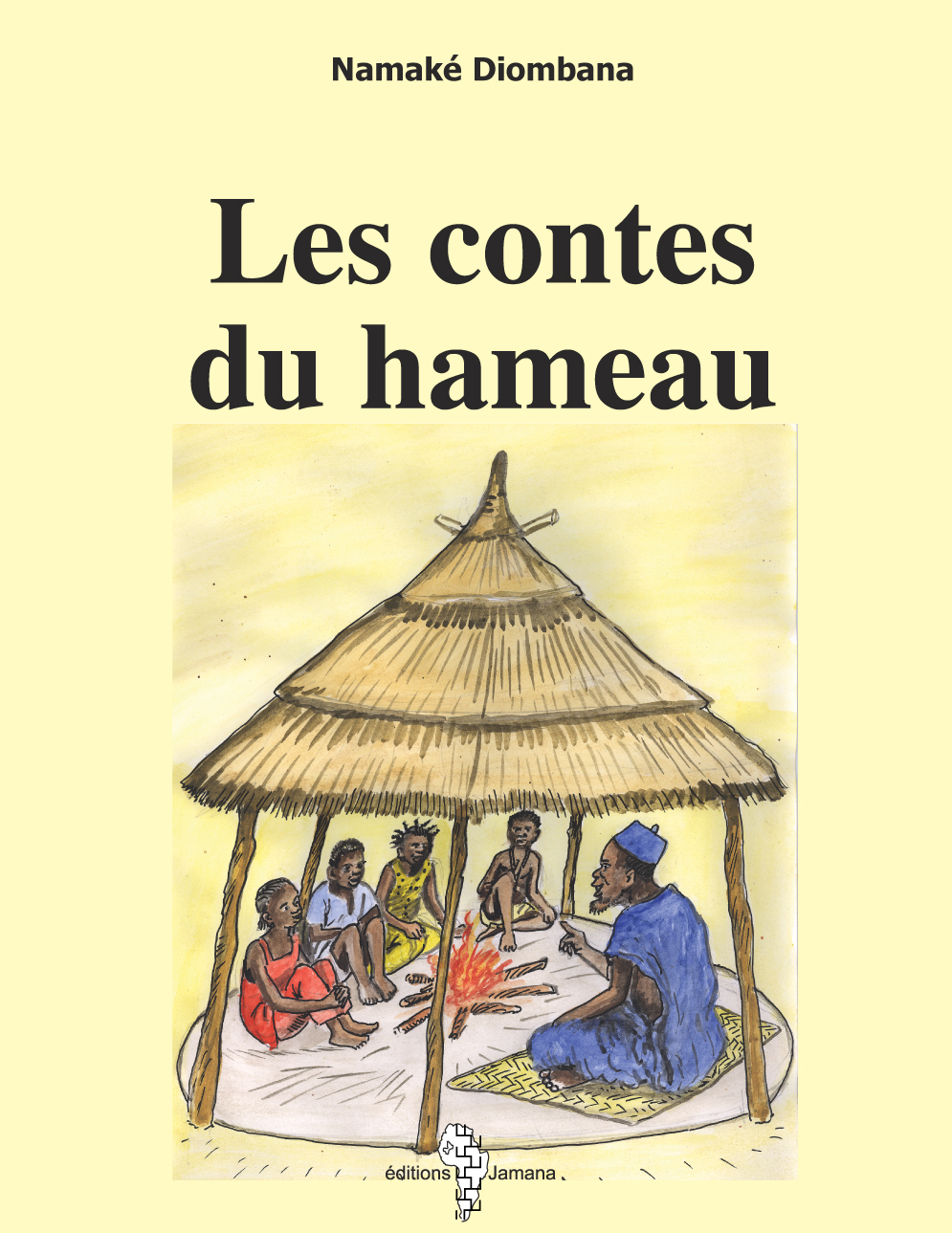
Namaké DIOMBANA
Nos contes et nos héros, les personnages les plus symboliques de notre terroir, du malin lièvre à la bête hyène,
en passant par la peureuse chèvre, le généreux roi et la belle princesse, se retrouvent dans Les contes du hameau, un recueil de contes savamment écrit par Namaké Diombana et ingénieusement illustré par Yacouba Diarra dit Kays. Une contribution à la connaissance de notre histoire à l’intention des enfants et aussi des grands.
2005 - 72 pages - 14,5 X 21,5 cm - 2500 F CFA (4 €) -
ISBN : 2-915032-39-4
Mama Kâaba SOUMARÉ
Les pièges du destin est l’histoire passionnante et riche en rebondissements de destins qui se croisent continuellement. Le roman met à nu les réalités d’une Afrique « moderne» paradoxalement accrochée aux traditions telles que la polygamie, la classification des hommes en castes, la grande autorité qu’exercent les parents sur leurs enfants. Il met en scène des acteurs incontournables, encore aujourd’hui, dans la société africaine : le griot, le devin, le tradipraticien. Par ailleurs, l’auteur explore avec beaucoup de réalisme l’amour, la jalousie, la douleur morale, mais aussi des qualités humaines devenues aujourd’hui rares telles que la générosité, le courage. Enfin, l’auteur aborde avec tact les difficultés d’un couple à vivre avec le VIH/Sida sous le regard de la société.
2007 - 15 X 22 cm - 6,11 € - ISBN : 2-915032-64-5
 Contacto : Hamidou KONATÉ
Ruisseaux d’Afrique
C/2186 Kindonou 04 BP 1154
Cotonou 04
Benín
Tél: (+229) 21 38 31 86
https://www.facebook.com/ruisseauxdafrique/?locale=fr_FR
Ruisseaux d’Afrique (Arroyos de Africa) es una editorial beninesa especializada en libros para niños: cerca de 150 títulos en unas veinte colecciones (cuadernos de actividades, álbumes ilustrados, novelas para jóvenes, documentales, libros de arte, ciencias humanas…). Su producción también está dirigida a la presentación de las artes africanas y de la vida en África. Es una plataforma de expresión para los autores, artistas, ilustradores y pintores africanos. La editorial Ruisseaux d’Afrique está comprometida con varias redes panafricanas e internacionales de coedición.
Nous tirons notre nom du proverbe « Les petits ruisseaux engendrent les grandes rivières ». C’est un message d’humilité (nous ne sommes que de tout petits ruisseaux culturels comme il y en a partout le monde) et un message de foi en l’Afrique (si tous les filons potentiels d’Afrique s’éveillaient et coulaient, nous formerions des rivières, des fleuves, des océans…). L’Afrique, en actualisant ses ressources endogènes peut se déployer, donner et recevoir, co-construire le monde.
 Contacto : Béatrice LALINON GBADO
 Responsable : Bérénice GANGBO
Spinifex Press
PO Box 105
Mission Beach
Queensland 4852
Australia
Tél: +61 418 506 645
www.spinifexpress.com.au
Spinifex Press es una editorial independiente y feminista, que publica libros innovadores y contravertidos con un aspecto optimista. Spinifex es una planta de las regiones áridas de Australia que es útil para la consolidación del terreno. Publicamos una gran variedad de obras, con enfoque sobre ecología, desarrollo, los derechos humanos y de los indígenas en el campo documental, y cuentos del mundo en el campo de la ficción y de la poesía. Estamos a la vanguardia de la publicación digital, con muchos de nuestros títulos disponibles en forma de eBook.
Spinifex is an Australian desert grass that holds the earth together.
Leer aquí la entrevista con Susan Hawthorne y Renate Kein, publicada en colaboración con ActuaLitté (25 de junio de 2018).

Merlinda BOBIS
1987. The Philippine government fights a total war against insurgency. The village of Iraya is militarised. The days are violent and the nights heavy with fireflies in the river where the dead are dumped. With her twelve-metre hair, Estrella, the Fish-Hair Woman, trawls corpses from the water that tastes of lemon grass. She falls in love with the Australian Tony McIntyre who disappears in the conflict. Ten years later, his son travels to Manila to find his father.
How much can the heart accommodate? Death and love, an enemy and a sweetheart, war and an impassioned serenade, and more. Only four chambers but with infinite space like memory, where there is room even for those whom we do not love.
Awards
Winner: 2014 Juan C. Laya Prize for Best Novel in a Foreign Language
Winner: 2013 Most Underrated Book Award
Finalist: 2013 Davitt Awards. Best Crime and Mystery Books by Australian Women
“As I was reading my thoughts kept turning to Wide Sargasso Sea. It shares with Jean Rhys’s masterpiece more than just a threat to topple into tragedy, but Fish-Hair Woman takes a wider view. It is a love story, a murder mystery, a story about family and a story about the impact of the kind of self-perpetuating government corruption that so often befalls a country in political turmoil. It’s ambitious and sprawling, and things could quickly go wrong. Fortunately, they don’t. Bobis is a talented, passionate writer who is unafraid of exploring the storytelling potential of the novel.”
–Tristan Foster, Verity LA
Published by Spinifex, co-edition with Anvil Press, Philippines; Translation into Spanish by JC Sáez Editor, Chile (2017).
2011 - 232 x 154 mm - 303 pp - AUD$29.95 - ISBN: 9781876756970
khulud kHAMIS
Jewellery designer, Maisoon, wants an ordinary extraordinary life, which isn’t easy for a tradition-defying, activist, Palestinian citizen of Israel, who refuses to be crushed by the feeling that she is an unwelcome guest in the land of her ancestors. Frustrated by the apathy of her boyfriend Ziyad and her father Majid—who want her to get on with her life and forget those in the Occupied Territories—she lashes out, only to discover her father isn’t the man she thought he was.
Raised a Christian, in a relationship with a Muslim man and enamoured with a Palestinian woman from the Occupied Territories, Maisoon must decide her own path.
khulud khamis unpacks the multiple layers of culture, religion, sexuality, politics, feminism and nationalism in the hope of gathering the fragmented pieces of the past and reclaiming the lost contiguity of being Palestinian.
—Samah Sabawi, Palestinian playwright and commentator
... khulud khamis has the rare gift of speaking directly to a reader’s soul; this radiant novel shows just what can happen when women challenge the limits of their world. —Sharon Olinka, author of The Good City
khulud khamis is a Palestinian feminist writer, born to a Slovak mother and a Palestinian father. She holds a Master’s degree in English Literature from the University of Haifa and works in the field of social change organizations. She is a member of the feminist organization Isha L’Isha – Haifa Feminist Center. She lives in Haifa with her daughter. This is her first novel.
Published by Spinifex Press; co-edition with New Internationalist UK; Italian translation FILA37 (2015); Turkish translation Gulduniya (2017).
2015 - 192 pp - ISBN: 9781742199009
Fiction
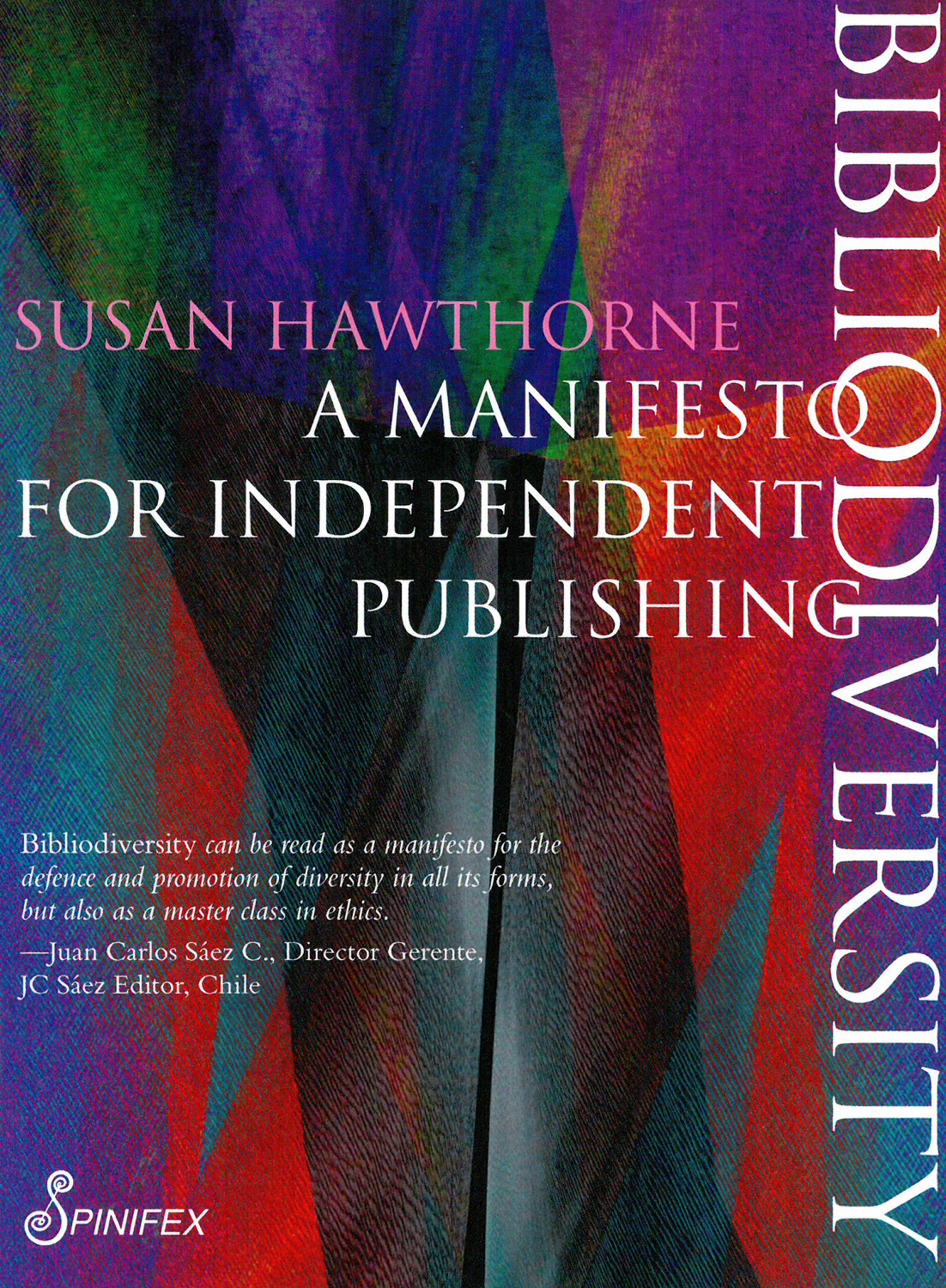
Susan HAWTHORNE
In a globalised world, megacorp publishing is all about numbers, about sameness, about following a formula based on the latest megasuccess. Each book is expected to pay for itself and all the externalities of publishing such as offices and CEO salaries.
It means that books which take off slowly but have long lives, the books that change social norms, are less likely to be published.
Independent publishers are seeking another way. A way of engagement with society and methods that reflect something important about the locale or the niche they inhabit. Independent and small publishers are like rare plants that pop up among the larger growth but add something different, perhaps they feed the soil, bring colour or scent into the world.
Bibliodiversity is a term invented by Chilean publishers in the 1990s as a way of envisioning a different kind of publishing. In this manifesto, Susan Hawthorne provides a scathing critique of the global publishing industry set against a visionary proposal for organic publishing. She looks at free speech and fair speech, at the environmental costs of mainstream publishing and at the promises and challenges of the move to digital.
Susan Hawthorne has worked in the book industry for more than 30 years as a writer, festival organiser, reviewer, editor, publisher and mentor. In 1991, she co-founded Spinifex Press with Renate Klein, after working for Penguin Australia for four years. She has written extensively about the industry, co-organised digital training for small and large publishers, taught Publishing Studies and Creative Writing, and has been an active member of peak bodies for publishers and writers. From 2011 to 2016, she was the English-language Coordinator for the International Alliance of Independent Publishers based in Paris. She is Adjunct Professor in the Writing Program at James Cook University and Publisher at Spinifex Press.
Bibliodiversity can be read as a manifesto for the defence and promotion of diversity in all its forms, but also as a master class in ethics.—JUAN CARLOS SÁEZ C., Director Gerente, JC Sáez Editor, Chile
This publication should be mandatory reading for anyone within the publishing industry.—MARY MASTERS, General Manager, Small Press Network, Australia
2014 - 104 pp - ISBN: 9781742199306
Non-Fiction
Rights: World. Published by Spinifex Press; Canadian rights sold to Fernwood Publishing; Translations into Arabic: December 2015, Tunisia, Éditions Med Ali, Arabic; Syria, Atlas Publishing, Arabic; Egypt, Elain Publishing, Arabic; Lebanon, Dar-Alfarabi and Arab Diffusion. French, 2016: France, Éditions Charles Léopold Mayer; Switzerland, éditions d’en bas; Benin, Éditions Ruisseaux d’Afrique; Mali, Éditions Jamana; Cameroun, Presses universitaires d’Afrique ; Spanish, 2017: Chile, JC Sáez; Mexico, Trilce Ediciones; Uruguay: Ediciones Trilce; also publishers in Colombia, Argentina, Peru, Bolivia. German, 2017, Verbrecher Verlag.
 Contacto : Susan HAWTHORNE
 Responsable : Renate KLEIN
 Contra Capa
Rua de Santana, 198 Loja – Centro
Rio de Janeiro - RJ 20 230-261
Brasil
Tél: (+55) 21 2508-9517
www.contracapa.com.br
Creada en 1992 en Copacabana, la librería Contra Capa inició sus actividades editoriales en 1996. Basadas al principio en las áreas de interés de la propia librería, esas actividades se diversificaron y hoy incluyen artes plásticas, fotografía, cine, psicoanálisis, antropología, economía, sociología, historia, crítica literaria y poesía. Su objetivo principal es producir libros que conjuguen la interdependencia entre texto e imagen, a la vista de las continuas transformaciones tecnológicas ligadas a la producción y a la diseminación del conocimiento y de la información.
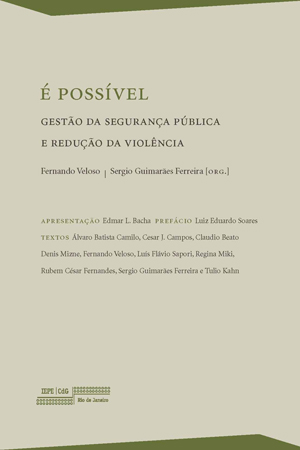
Fernando VELOSO, Sergio GUIMARÃES FERREIRA (orgs.)
Este importante livro mostra que é possível alcançar redução expressiva da violência armada, da insegurança e da criminalidade que aterrorizam a população de grandes áreas urbanas do Brasil. Seus autores mostram – com fatos e não vagos discursos – que isso não se trata de uma esperança insensata. Não apenas porque foi alcançado em Nova York, Boston, Bogotá e várias outras cidades do mundo, mas principalmente porque, no Brasil, reduziu-se a violência em lugares em que isso era mais improvável: no Jardim Ângela, bairro da periferia da cidade de São Paulo que chegou a ser considerado o bairro mais violento do mundo, e em Diadema, que deixou de ser em quatro anos a cidade mais violenta de São Paulo, passando a ocupar o 18º posto.
Se você não pretende se deixar levar pelo desencanto, pela frustração, pelo ceticismo e pela desesperança, leia este livro. Entenderá, com base em experiências reais, que é possível, sem ilusões voluntaristas, apelos messiânicos e excessos e abusos no exercício da autoridade do Estado, mostrar aos bandidos armados que essa é uma longa guerra de muitas batalhas, mas que, ao fim e ao cabo, eles não só não podem ganhá-la, como a estão perdendo – e a perderão.
2008 - 208 páginas - 16 x 23 cm - R$ 35,00 - ISBN: 978-85-7740-046-1

Lêdo IVO
Pinturas de Gonçalo IVO
Desenho de Gianguido BONFANTI
O poema narra a visão da infância guardada pela memória. Obra de perda e despedida, seus versos longos se desdobram como as ondas do mar alagoano. Música e imagem se fundem para exprimir uma reflexão sobre o sentido da existência, da qual as pinturas de Gonçalo Ivo não são comentário ou simples ilustração.
2008 - 64 páginas - 16,8 x 24,5 cm - R$ 38,00 - ISBN: 978-85-7740-040-9

Katia MACIEL (org.)
37 textos de teóricos e artistas que compõem, em suas inter-relações, amplo panorama sobre as novas situações de cinema, em que superfícies híbridas de luz e movimento se conjugam com a participação e a imersão dos espectadores. A introdução da organizadora define o título do livro.
2009 - 432 páginas - 16 x 23 cm - R$ 65,00 - ISBN: 978-85-7740-009-3
 Contacto : Araken GOMES RIBEIRO
Alianza internacional
de editoriales independientes
38 rue Saint-Sabin
75011 Paris - France
