“I wouldn’t have written the many books if I didn’t have publishers who were sensitive, publishers who had their own networks, publishers who worked with my philosophy of smallness is beautiful, smallness in self-organised form is largeness—it is largeness of mind, it is largeness of heart, it is largeness in terms of expanding the possibilities of humanity and the earth in a time where the dominant economy would like to shrink those possibilities.”
“If you were not as diverse as you are and if you did not publish the diversity of ideas that are necessary for our times not only would you as a publishing network not have the resilience and robustness that is needed, but wouldn’t be providing that amazing robustness to society in a period where, like monocultures are destroying the fertility of the soil and creating deserts (...)”
“More than ever, the future of the book—namely its diversity and promotion of minority and alternative voices—rests on the shoulders of independent editors, who give life to the book’s cultural necessity through their commitment, convictions, and attachment to causes that break with the lone dictature of capitalism.”
“My third novel, Munyal ; les larmes de la patience (forthcoming in English translation in October 2022 as The Impatients), is now available in many Francophone African countries because of the Alliance’s ’Terres solidaires’ collection. Many African authors feature on that list, but the part that brings me the most pride is to have such a recognition from Sub-Saharan Africa, where I live and work. This is truly the spirit of diversity that is so dear to the Alliance, and what represents the values that we writers and editors must defend and promote. The Alliance plays such a fundamental role in this sense, mitigating as much as possible the issue of book distribution in Sub-Saharan Africa, particularly Francophone countries.”
The Independent Publishing Glossary is a collective project led by publishers from the Spanish-language network of the International Alliance of Independent Publishers.
It shows the meanings and definitions of words commonly used in publishing. It is an evolving project, which will be enriched over time in order to include new concepts and to take into account other proposal for definitions. The idea is not to freeze or petrify the concepts, but to open them up to enhance their multiple meanings.
Each term is signed by the person who worked on the definition. The glossary was edited by Germán Gacio Baquiola (Corredor Sur Editorial, Ecuador / Colectivo Editores independientes de Ecuador), Teresa Gottlieb, (Editorial Maitri, Chile), Paulo Slachevsky (Lom Ediciones, Chile) and Miguel Villafuerte, (Editorial Blanca, Ecuador).
Continue the analyses, reflections and advocacy via the thematic working groups set up during the 2014 Conference and set up new working groups on the themes and issues discussed during the 2021 Conference
Providing tools and documenting international independent publishing
2/ The Alliance, a space for collaboration and sharing
Share practices and know-how (on regional, national or even international levels, depending on the needs expressed) between publishers
Meet and strengthen the flow of exchanges
3/ The Alliance, a tool for promoting independent publishing and the circulation of books
Encourage the visibility and promotion of independent publishing
Promote the circulation of works and productions of independent publishing houses
4/ The Alliance, a laboratory of alternative editorial practices
Gathered in the city of Pamplona-Iruñea from 23 to 26 November 2021 at the fourth International Conference of Independent Publishers, organised in partnership with EDITARGI (Association of Independent Publishers of Navarre), we, the publishers of the International Alliance of Independent Publishers (IAIP), reaffirm our commitment to:
the cultural, social and political character of books and reading;
the democratisation of books in our societies;
reading as an emancipatory practice that strengthens the critical thinking of citizens and stakeholders within their society.
Read the full Declaration here:
This Declaration is in line with the discussions and work of the International Alliance of Independent Publishers, in particular the Declarations of 2003, 2007 and 2014 and the 80 recommendations in favour of bibliodiversity. It will be complemented by a Guide to Good Practice (collective work in progress, for publication in the first half of 2022).
The International Alliance of independent publishers is a professional collective that brings together more than 980 independent publishing housesin 60 countries around the world. Created as an association in 2002, it is composed of 6 language networks (English, Arabic, French, Spanish, Portuguese and Persian) and thematic groups. Members of the Alliance are publishing houses and publisher collectives.
The Alliance’s activities promote and strengthen bibliodiversity (cultural diversity applied to the world of the book).
In alignment with its mission, the Alliance created a Bibliodiversity Observatory that gathers studies, analysis and tools produced by the Alliance, aimed at professionals and public authorities. The Observatory’s objectives include assessing and strengthening bibliodiversity in the world.
The Alliance also hosts and facilitates international meetings and thematic workshops (for example on children’s book publishing, digital publishing, etc.), enabling independent publishers from various continents to exchange ideas and initiate collaborations. These meetings support increasing capacity through peer sharing, an aspect developed in particular around the issue of digital publishing in the context of the Digital Lab.
The Alliance supports international publishing projects (co-publishing, translation, copyright transfers, etc.), for greater circulation of texts and fair access to books for readers.
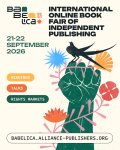
In 2022, the Alliance launched a first-of-its-kind initiative: the first edition of Babelica, an international online Book Fair of Independent Publishing, which takes place once a year, on 21 September (International Bibliodiversity Day).
Support the creation of national, regional and international book policies
Create the Bibliodiversity Observatory: mapping of national book policies in Latin America, the Arab world, West Africa… and developing a bibliodiversity measurement tool
Create a censorship typology; draft advocacy plans in support of, and in solidary with, publishers
Strengthen collaborative spaces and innovate to respond to tomorrow’s changes and issues
Develop the Digital Lab, organize workshops, and sharing of experiences and tools (on digital publishing, editorial solidarity partnerships, national and local languages publishing, etc.)
Modernize book donation practices: Book Donation Charter reviewed by professionals from the global South
Participate in book fairs (collective stands in book fairs in both the global South and global North), promotion of books from the South in the North
Develop and strengthen intercultural sharing
Develop and support copublishing/ translation projects: North-South and South-South editorial partnerships bearing the “Fair Trade Book” label, and research on economic solidarity models (social and solidarity economy)
Publishers collectively adopted the Alliance’s 2015-2018 objectives during the International Assembly of independent publishing (2012-2014). Projects and activities arise from each of these directions, and are implemented by the Alliance during the 2015-2018 period.
The socio-economic environment, historical approach and political context are only some of the factors to consider in appreciating, in all its complexity and diversity, the notion of an independent publisher. Independent publishers in Chile, France, Benin, Lebanon, or India work in specific contexts that have direct consequences on their activities. However, although the situation differs from one country to another, it is possible to agree on some criteria in order to define what is an independent publisher. Independent publishers develop their editorial policy freely, autonomously, and without external interference. They are not the mouthpieces for a political party, religion, institution, communication group, or company. The structure of capital and the shareholders identity also affect their independence: the takeover of publishing houses by big companies not linked to publishing and implementation of profit-driven policies often result in a loss of independence and a shift in publishing orientation. Independent publishers, as defined by the Alliance’s publishers, are originating publishers: through their often-innovative publishing choices, freedom of speech, publishing and financial risk-taking, they participate in discussions, distribution, and development of their readers’ critical thinking. In this regard, they are key players in bibliodiversity.
During the closing meeting of the International Assembly of Independent Publishers (Cape Town, South Africa, September 18-21, 2014), 400 independent publishers from 45 countries signed the International Declaration of Independent Publishers 2014. Collectively drafted in three languages, on September 20, 2014, the Declaration 2014 is available in several languages (French, English, Spanish, Portuguese, Arabic, Farsi, Italian, etc.).
Do not hesitate to share the Declaration and promote and strengthen bibliodiversity with us !
Read here the 80 recommendations & tools (on digital publishing, public book policies, youth literature, national and local languages publishing, solidarity publishing partnerships and “Fair Trade Books”, book donations).
“Resist and hope”
This year, Babelica amplifies the voice of the new generation!
For several months now, the International Alliance of Independent Publishers has been working alongside Double Ponctuation to publish a very special issue of the journal Bibliodiversité, which will give a voice to 30 young authors under the age of 30, from 30 different countries. Invited through the Alliance’s member publishers, these young authors speak out and tell us about their world, their society, their anxieties, but also their struggles, their utopian visions and their hopes.
This huge project will not only result in a collection of texts entitled “Resist and Hope” but will also shape our discussions within Babelica.
They live in Niger, Morocco, the Philippines, Singapore, India, Afghanistan, Palestine, Mozambique, Uruguay, Chile, Ukraine, the Czech Republic, Turkey…; these young talents will take centre stage at the 2026 edition of Babelica, and we invite you to listen to them and engage in dialogue with them on 21 and 22 September!
The Babelica 2026 programme is available here (subject to change).
“Now that we have entered the 21st century, it is difficult to dissociate the end from the means: what to say, and where to say it? Thus, we find that many authors seeking to promote debate, creativity and critical thinking, justice and equality are published by large conglomerates with multiple editorial labels. Isn’t the transformative power of these works reduced to nothing when they plunge into the workings of the entertainment industry? It is a fact that transnational corporations, whatever their field of action, are the very expression of the system that dominates us. By choosing them as publishers, do we not somehow leave the world of transformative ideas in the hands of those who lay the foundations of the model we criticise? Doesn’t that strengthen the control of big capital over the word and our daily lives? Moreover, how can we not question the cross-industry investment of the business groups that own publishing houses? And, are these investments neutral?”
In this open letter, independent publishers invite all the actors of the book industry to reflect with them on their practices and the impacts that result from them. In particular, they call on authors, academics and intellectuals to work on projects whose vocation is to transform the order of things and not to consolidate the status quo, to publish their works in independent publishing houses in their own countries, and to give preference to independent publishing houses when it comes to transferring foreign and translation rights.
As the world suffers the health, social and economic consequences of the pandemic, book ecosystems and independent publishing houses are further weakened and, for some, are trying to survive. If solidarity between creators and book professionals is one of the foundations of bibliodiversity, this solidarity is vital in the current context.
In a period when freedoms such as the right to write, to publish, and to read are increasingly under threat, we revisit the insights and perspectives shared by independent publishers during the Babelica Book Fair.
In October 2024, the members of the Alliance decided to create a space of solidarity with book professionals in Palestine, to promote and encourage the circulation of Palestinian texts across continents, and to make the voice of book professionals in Palestine heard.
This space is flexible and will take different formats. In 2026, the Alliance is offering a catalogue of titles on Palestine (titles published by Palestinian publishing houses and/or about Palestine). This catalogue is based on titles proposed and recommended by Alliance members. The primary objective of this catalogue is to promote projects involving the transfer of rights, co-publications and translations of titles published in Palestine or about Palestine. It will be regularly updated and expanded.
In June 2025, Arabic-speaking publishers (including Palestinian publishers) and French-speaking publishers gathered in Tunis for meetings organised by the Alliance to present titles from their catalogue on Palestine, with a view to exchanging rights (transfer of rights, co-publications, translations).
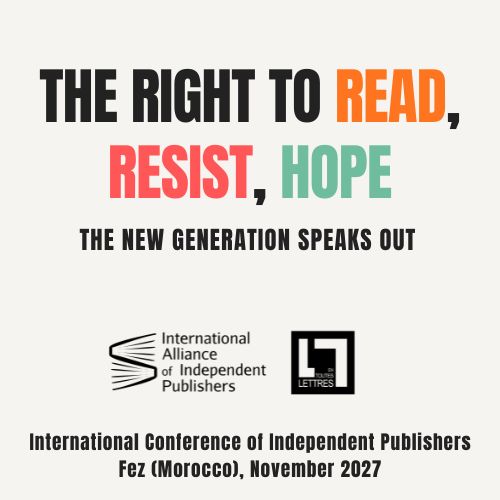
The right to read, resist, hope The new generation speaks out
Initiated by the International Alliance of Independent Publishers, the Fez Conference is organised in collaboration with En toutes lettres in Morocco, which put forward Fez’s candidacy to host this upcoming major event.
Common thread Strengthening and promoting the values of the Alliance
In 2021, while the world was living to the rhythm of the Covid pandemic, preparations were underway for the 2021 Pamplona Conference, with one key word in mind: REthink. How would independent publishing be built “after”? What would be the responsibility of independent publishers in the transitions and transformations of tomorrow? How can we (re)affirm the role of bibliodiversity in building more emancipated, freer and fairer societies? The Declaration that came out of the Pamplona Conference reflected (and still reflects) the collective will of independent publishers to work “For a decolonial, ecological, feminist, free, social and united independent publishing”, recalling their commitment to the cultural, social and political nature of books and reading; the democratisation of books in society; reading as an emancipatory practice that forges the critical spirit of citizens, as active participants within their society.
Following the 2021 Conference, several initiatives were set up: a Guide to Good Practice, thematic working groups within the Bibliodiversity Observatory, the Babelica Book Fair dedicated to independent publishing on an international scale, translation and co-publishing projects, mapping, analyses, workshops, meetings, etc.. At the same time, the Alliance network has grown and welcomed new publishing houses (particularly in Asia and the Arab world). A lot has happened in 6 years.
The Conference will therefore continue the work and reflection that are at the heart of the Alliance network around these issues (book ecology, public book policies, freedom to publish, solidarity co-editions, digitalisation/ AI, etc.) and commitments made by independent publishers.
• Passion at the expense of health (mental, financial, physical...)?
• Which book for which reader?
• Status of book donations?
• What are the alternatives to industrial piracy?
• What are the uses and practices of AI for independent publishing? What are the possible “ethical” alternatives?
• What are the good ecological practices for publishers?
• What translations from so-called ‘minority’ languages into the dominant languages?
Inclusive and welcoming; fostering dialogue and amplifying voices
The 2027 Conference is also shaped by several key words: ‘everyday’ youth/ Gen Z/ LGBTQIA+ voices/ censorship (and the circumvention of censorship)/ mental health/ well-being/ safe spaces/ inclusion/ critical thinking...
A chaotic and bruised world
Since 2021, new conflicts have erupted around the world, and the violence of war has become a daily reality for more publishers. The rise of nationalism, conservatism and authoritarianism has spread throughout societies, with waves of racism and sexism threatening diversity (gender, religious, cultural, etc.). Natural disasters have multiplied, rendering us powerless spectators of a predicted climate crisis. Financial and technological empires have been formed and consolidated, imposing a standardisation of content, undermining the current book ecosystem and limiting freedom of expression and critical thinking.
It is in this increasingly chaotic and bruised world that we find ourselves 6 years on... A world where it is becoming difficult to listen to one another, to engage in dialogue, to disagree. A world where the debate of ideas and books is threatened (even banned), where censorship (and self-censorship) prevents a plurality of points of view and testimonies...
Spaces of solidarity and resistance
In this context of retreat, difficulties and even dangers for the expression and representation of all diversities, there are many spaces of solidarity and resistance on a small or large scale that achieve great things. These “safe spaces” can be helpful, unifying and hopeful. These spaces of solidarity and resistance will be at the heart of the forthcoming International Conference of Independent Publishers.
• How can we resist together?
• What are the means of circumventing the attacks on freedoms?
• What social and political role do books and publishers play?
• How do we discuss complex and sensitive issues in an intercultural context?
• How do we publish in times of crisis and war?
• How do we take care of ourselves, of these spaces of solidarity?
Other voices/ directions
In Indonesia, Madagascar, Morocco, Nepal, Peru... the Generation Z is on the streets, demanding new possibilities, calling for greater social justice and dreaming of a dignified life. This new generation will lead the Conference, thanks to a partnership with the School of Critical Thinking, an initiative run by En toutes lettres in conjunction with the Faculty of Legal, Economic and Social Sciences at Sidi Mohamed Ben Abdellah University, Fez. A group of students and emerging book professionals will develop the Conference programme, facilitate the debates and discussions and share their experiences and perspectives.
• How and around what issues is the new generation organising its resistance?
• What role and place do books and reading play in this resistance - and more broadly for the new generation?
• What are the ways in which Gen Z organise themselves and their knowledge?
• What are the hopes and utopias of young people?
• How can we build bridges (between cultures, generations, etc.)?
As a unique moment for the independent publishing movement, the Conference highlights another facet of the world of books, made up of a multitude of voices that are often marginalised and stifled. Based on intercultural dialogue, solidarity and a plurality of approaches, the Conference is a forum for discussion, reflection, research and action. It provides an overview of independent publishing worldwide (Latin America, Africa, Asia, Europe, the Arab world and Oceania): it sets the tone for the trends and issues that are shaping the world of books - and, more broadly, the state of the world.
More information here (document under development, currently being collectively constructed!):
Author(s) : Mouneer AL-SHAARANI
Publishing countries : Egypt, United Arab Emirates, Lebanon, Syria, Tunisia
Language(s) :
English
, Arabic
, Spanish
, French
This book contains an intensive introduction by Mouneer Al-Shaarani, in which he illuminates his vision and his achievement in grounding, developing, and modernizing Arabic calligraphy as an autonomous art form within the field of visual arts. His approach is built upon a critical re-reading that diverges from conventional narratives about its theoretical history, aesthetic evolution, and creative manifestations.
In addition to more than 100 colorful calligraphic panels created throughout his career, Al-Shaarani produced these works according to his own vision, method, and distinctive style. He employed various scripts —some of which he partially developed, others he transformed qualitatively in terms of letterforms and structure. In some cases, he revived and modernized traditional scripts, or even re-created them entirely. He also designed new forms inspired by the aesthetic qualities of certain scripts or based on the fundamental structure of Arabic calligraphy.
The book is in Arabic with translation into French, English and Spanish. It’s a co-publishing project between members of the Arabic-language network of the International Alliance of Independent Publishers (Atlas Publishing, Damascus; Arab Diffusion, Beirut; El Ain, Cairo; Med Ali, Sfax and Mamdouh Adwan, Sharjah).
More than 160 independent publishing houses from 58 countries took part in Babelica: for those wondering what bibliodiversity is, here is a fine example of it through the diversity of titles, languages, countries, points of view and sensibilities represented by these publishing houses. A multitude of voices, often invisible, can be discovered here.
Some excerpts from the round tables at this edition of Babelica: #Palestine
“Even though the books were destroyed and burnt, making them unsuitable for reading, we found another use for them. We distributed them to the inhabitants so that they could use them as fuel, so that they could cook in the absence of gas. In this way, the books became a means of subsistence” Samir Mansour (Samir Mansour Bookshop & Printing, Gaza)
“It is crucial to document the situation of the authors: who has been killed, what are their publications? We must honour the authors in Gaza and archive their work, both on paper and digitally” Fuad Akleek (Al Raqamia Publishing House, Jerusalem)
“As soon as the war ends, we will work together, hand in hand, to restore culture to its rightful place in the Gaza Strip. We will resume our role with even greater vigour, to produce new books and reconstitute what has been lost in private, public and collective libraries. In this way, we will pass on the torch to the new generation, so that they carry it armed with culture and conscience, and not in ignorance of their history” Atef Al Durra (Al Kalima Publishing House, Gaza)
#Freedom to publish
“When the statehood is in danger, and when we see the aggressor is investing so much money in propaganda and in the destruction of our culture, our language, everything, we are forced to impulse censorship because that’s the way to survive and to protect what is ours. In peaceful time, the question of censorship will be a totally different point of discussion but right now, unfortunately, that’s the need” Slava Svitova (Creative Women Publishing, Ukraine)
“When we chose to not publish in Urdu and to publish in English, that’s the big self-censorship that we have” Saeed Husain (Folio Books, Pakistan)
“Writers who are critical of the government, of policies, writers who express their identity are facing censorship, imprisonment, judicial, arrests. Governments use security laws to shoot down critical voices. The main tendencies are digital shot down ; LGBTQIA+ writers are attacked, books are banned – in America last year, we had 10 000 instances of books banned” Romana Cacchioli (PEN International)
#Public Book Policies
“We cannot escape the legacy of colonial policy. Publishing is developed around text books, importations, and not really around an independent creative publishing. Today, our industry really reflects the influence of this colonial culture. English is the dominant language in schools for reading for young people in Ghana and in many parts of Anglophone Africa. That is a lot of work for independent publishers to produce works in the creative space and in local languages but they struggle” Ama Dadson (Akoo Books, Ghana)
“This study explores the publishing policies in the Arab world, involving publishing specialists from eleven Arab countries. It focuses on several key themes, including: freedom of expression, the publishing industry, book-related public policies, various forms of censorship, the book-related socioeconomic environment, intellectual property rights and other relevant issues” Hani Altelfah (Al Marfaa, Turkey)
This year, the main objective of the ICIP meeting is to collectively organise the next International Conference of Independent Publishing, which will be held in Fez (Morocco) in 2027.
Jean was a founding member of the Alliance, one of its pillars, who always believed in people, dialogue, and the intersection of languages and cultures. A fervent advocate of solidarity co-publishings, he initiated and participated in numerous projects aimed at circulating literature across countries and continents.
It is so hard right now to realise that we will no longer see Jean, that his laughter will no longer ring out, that we will no longer be able to learn from him. Jean’s passing reminds us of the necessity and importance of solidarity, friendship and generosity; it is up to us to continue on this path, to be curious about life and about others; it is up to us to believe in utopias.
After earning a bachelor’s degree from Sciences Po Rennes and spending a year abroad in Chile, Eulalie Patat is currently pursuing a Master’s degree in Cultures and Transitions at Sciences Po Rennes. Interested in issues of cultural diversity, the circulation of knowledge, and book policy, she is focusing on the independent and socially conscious publishing sector. In 2025, she joined the team at the International Alliance of Independent Publishers.
Discover publishers’ backgrounds, get to know their work and their publications, and listen to the voice of independent publishers… by reading the exclusive publishers portraits in this section!
After studying at the IUT Book Trade in Aix-en-Provence, Laurence Hugues went to earn a bachelor’s degree in Literature at Trois-Rivières University in Québec, and later a Masters’ degree in Book Marketing at Paris 13-Villetaneuse University. After several professionals stays in West Africa, she joined the International Alliance of independent publishers’ team in 2007. In July 2009, Etienne GALLIAND passed on management responsabilities to Laurence HUGUES.
After a master’s degree in French Literature at the Sorbonne Nouvelle, Camille CLOAREC worked at the Maison de la Poésie in Nantes and was also the coordinator of literary life at Ciclic (the center of book, cinema and digital culture for the Loire Valley Region), before being in-charge of the book and debates office at the French Embassy in Canada. In 2019, Camille began learning Telugu (Indian language) at Inalco.
Camille joins the Alliance team in July 2020; she is in charge of the management of the the association’s language networks and the co-publishing and translation projects within the Alliance.
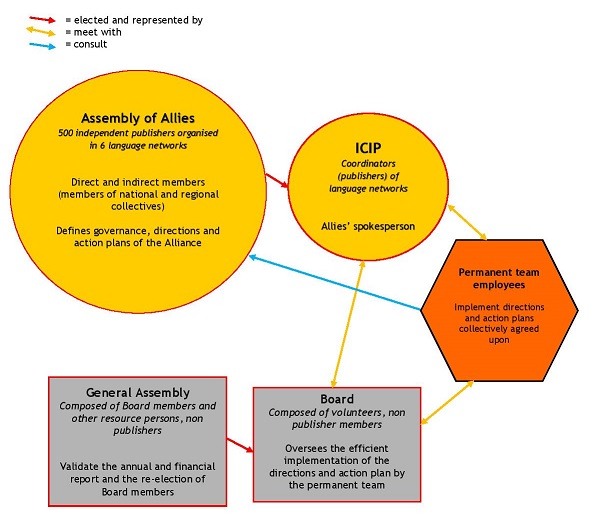
The Alliance has adopted an original method of internal organization, respecting both the democratic principles and the functioning of an international network. The Alliance rests above all on its member publishers, represented by the International Committee of Independent Publishers (ICIP). It also relies on a Board – charged with upholding and respecting the publishers’ decisions – and a permanent staff.
After studying political sciences, Laura Aufrère was for 5 years coordinator of the French confederation gathering not-for-profit cultural professional initiatives from a variety of disciplines (music, theater, outdoor and circus, visual arts, etc.), rooted in the solidarity economy movement (UFISC). She is now a PHD student in management, looking specifically into critical approaches in the organisation theory and the digital humanities fields. She studies commons and social and solidarity economy initiatives, focusing specifically on work and labour organisation, cooperation and governance issues, and social protection. She joins the Alliance Board in 2016 and is now its President.
Vice-President of the Board of the Alliance since the General Assembly of June 20, 2011, Luc Pinhas is a former student of the École normale supérieure in Saint-Cloud. He holds a PhD in Communication Studies. He directed the Master’s programme in ‘Book Marketing’ at the University of Paris 13-Villetaneuse between 2000 and 2019.
Thierry Quinqueton has long experience in the publishing world and of intercultural dialogue. He was Literary Director at the Desclée de Brouwer publishing house (France) from 1991 to 1999, and then Director of the French Cultural Center in Khartoum from 2000 to 2004. After spending four years at the French Department of Foreign Affairs (department of written documents and libraries), he was responsible from May 2009 to July 2013 for the libraries network in the Châtellerault area; from 2013 to 2017, he was in charge of the Book Office at the French Embassy in Beirut, Lebanon. Thierry Quinqueton also pursues his research on the links between market economies, public policies, and non-monetary aspects within the book economy (Law and Development of Social and Solidarity Economy - University of Poitiers). Author of “Que ferait Saul Alinsky?” (DDB, 2011), he was Chairman of the International Alliance of Independent Publishers from 2006 to 2013.
Mariette Robbes is specialized in network facilitation, public relations and project management in the associative and cultural sectors. She has worked at Katha publishing (India), at the International Association of Francophone Booksellers and the International Youth Library (Germany).
Her growing passion for “third places” and innovative ways of working and creating (fablabs, coworking, shared workshops, etc.) led her to explore new horizons. She is now working as a Network Development & Animation Manager at myCowork, in Paris.
Passionate about publishing for youth in India, she is also an associate member of the academic project DELI (Encyclopaedic Dictionary of Literatures of India). In addition, Mariette works as a freelancer (support for fundraising, graphic design and layout).