The Alliance

Presentation & objectives

Bibliodiversity, 2014

Bibliodiversity is cultural diversity applied to the world of books. Echoing biodiversity, it refers to the critical diversity of products (books, scripts, eBooks, apps, and oral literature) made available to readers. Bibliodiversity is a complex, self-sustaining system of storytelling, writing, publishing, and other kinds of production of oral and written literature. The writers and producers are comparable to the inhabitants of an ecosystem. Bibliodiversity contributes to a thriving life of culture and a healthy eco-social system. While large publishers do contribute to publishing diversity through the quantitative importance of their production, it is not enough to guarantee bibliodiversity, which is not only measured by the number of titles available.
Independent publishers, even if they consider their publishing houses’ economic balance, are above all concerned with the content of published products. Independent publishers’ books bring a different outlook and voice, as opposed to the more standardised publications offered by major groups. Independent publishers’ books and other products and their preferred diffusion channels (independent booksellers, among others) are therefore essential to preserve and strengthen plurality and the diffusion of ideas. The word bibliodiversity was invented by Chilean publishers, during the creation of the “Editores independientes de Chile” collective in the late 1990s. The International Alliance of independent publishers significantly contributed to the diffusion and promotion of this notion in several languages, including through the Dakar Declaration (2003), Guadalajara Declaration (2005), Paris Declaration (2007), Cape Town Declaration (2014) and the Pamplona-Iruñea Declaration (2021). Since 2010, International Bibliodiversity Day is celebrated on 21 September.

See the article “Bibliodiversity” on Wikipedia.
The article also exists in French, Spanish and Portuguese.

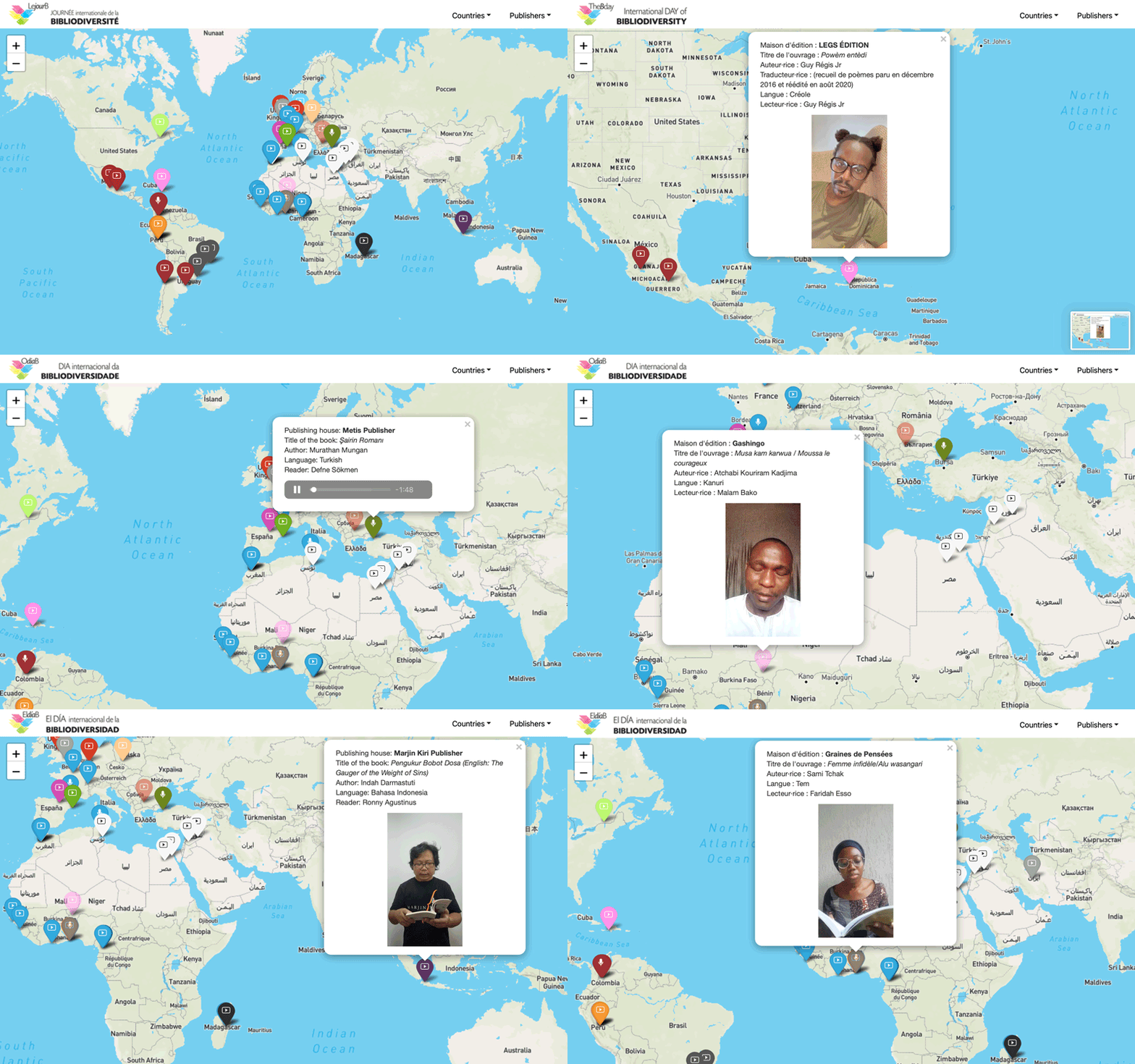
The bibliodiversity, in pictures!
GIF - 1.3 MiB

Share this article

Predation, 2013

Container full of books inundating the market, books produced in another cultural setting given away free to readers or public libraries, the setup of local branches by publishing groups from abroad aiming to achieve monopoly conditions… Drawing on some examples of practices with damaging consequences to the publishing market in developing countries, Étienne Galliand (founder of the International Alliance of Independent Publishers) presents an overview of the predation to which emerging markets are subjected directly or indirectly. An edifying panorama.

As a complement to this article, you can consult the Guidelines for Fair Publishing Partnerships (in French).

Share this article

The “Fair Trade Book”

The label “Fair Trade Book” is attributed by the International Alliance of independent publishers to works published in the context of international publishing agreements that respect each other’s particularities: fair co- publishing. These fair copublishings enable the sharing of costs linked to intellectual and physical production of books and therefore ensure an economy of scale; an exchange of professional know-how and a common experience, while respecting the publishers’ cultural contexts and identities; and a distribution of works on a broader scale by adjusting prices for each geographic zone.

Share this article

Fair speech

The notion of fair speech expands the idea of ‘free speech’ to incorporate the concept of justice. Indeed, in a context of media concentration, dominant powers (whether political, economic, religious, ideological, etc.) are the most represented and heard (because they are powerful or loud). Fair speech fosters speech equity for other voices that are often marginalised and/or censored to be heard. Fair speech therefore promotes an equitable access to expression (for example for women, historically marginalised groups, etc.), enabling an authentic diversity of voices. This concept was created by Betty McLellan in Unspeakable (Spinifex Press, 2010, Australia) and promoted by Susan Hawthorne in Bibliodiversity: A Manifesto for Independent Publishing (Spinifex Press, 2014, Australia).

Share this article

The Declarations of 2003, 2005 and 2007

The Dakar Declaration (December 2003) is the foundational text of the Alliance and birth certificate of the association. The Guadalajara Declaration (October 2005) is the outcome of a meeting held in Mexico between independent publishers from the Latin world.
The International Declaration of independent publishers for the protection and promotion of bibliodiversity (July 2007) was drafted and signed by the 70 publishers participating to the International Assembly of independent publishers held in Paris in 2007.
These three texts, as well as the 2014 International Declaration of independent publishers, are milestones in the history of the Alliance – they are a reminder, and bear witness to the present bearing testimony to the commitment of independent publishers, and serve as their policy guidelines.

Share this article

Activities

A Violência das Cidades

Author(s) : Yves PEDRAZZINI
Publishing countries : Angola, Brazil, Guinea-Bissau, Portugal
Language(s) : Portuguese

Translated into portuguese by Giselle UNTI.

This book was co-published by the Brazilian publisher
Vozes, the Angolan publisher Chá de Caxinde and the Portuguese publisher Campo das Letras and received support from the Prince Claus Foundation for culture and development.
Following Les batailles de l’eau by Mohammed Larbi Bougerra, this is the second French-language title of the “Enjeux Planète” series, translated and published in the Portuguese series named “Questões Mundiais”.

In the North as in the South, we like big cities, but we don’t like their violence. A common tendency is to blame the poorest inhabitants for this violence, and then, in order to fight against its spread, to adopt strategies based on strong security measures: our societies are quickly becoming societies of fear. Town planning, already, divides space into fortresses and ghettos. One cannot continue to conceptualize urbanization in police stations: an alternative analysis of the phenomena of urban violence and insecurity is necessary. This can only be done by putting this question in perspective, in the context of the violence of urbanization and globalisation, while also taking into account, the point of view of the poor and particularly among these poor, the “malicious ones”, outsiders, illegal immigrants, criminals, members of gangs.
When everything seems blocked, the “vision of the poor” opens the way to a pacification of urban territories. Against the current obsession with security, a creative dialogue is essential with those that the ruling power blames or distrusts. This book is addressed to all those who seek to understand the logic of the city, those for whom the city inspires fear and love, who don’t want to give up it, but also to the inhabitants of the extreme districts, even if they are poor and “malicious”, even if the city destroys them more than it protects them. To rebuild cities we can live in, we must disobey the models.

Year of publication: 2006,
188 pages

Collection Global Issues

12 francophone publishers deal with different issues on the challenges of globalization (natural resources, development aid, North-South relations, etc.). An international collection for another globalization: “Global Issues” also exists in English and in Portuguese. Short essays, conveying diagnoses and proposals, perspectives for action, accessible to a large public. Bearing the “Le Livre équitable” (Fair Book) label, this collection is subject to fair and solidarity-based trade agreements.

Share this article

Water Under Threat

Author(s) : Mohamed LARBI BOUGUERRA (dir.)
Publishing countries : South Africa, Canada, India, Malaysia, United Kingdom, Thailand
Language(s) : English

Translated by Patrick CAMILLER

Also available in Arabic, Portuguese, Spanish and French.

This English co-publication now accompanies the French-language (12 publishers), Portuguese-language (5
publishers), Arabic-language (5 publishers)and Spanish-language (1 publisher) versions.

Rapid population growth, climate change and pollution have combined to make it the resource over which wars may be fought in years to come. But does water have a price? Is it a right or a need?
Increasingly, water is viewed as a commodity whose function is to generate profits. In this book, Larbi Bouguerra argues that instead we should view it as a common good of humanity. Water has an exceptional cross-cultural symbolic value and its use raises enormous questions about our lifestyle, our ethics and our relationship with nature. Bouguerra makes a powerful case for a society that is more economical with water and manages it openly and democratically, as a global resource.

Year of publication: 2006,
208 pages

Collection Global Issues

12 francophone publishers deal with different issues on the challenges of globalization (natural resources, development aid, North-South relations, etc.). An international collection for another globalization: “Global Issues” also exists in English and in Portuguese. Short essays, conveying diagnoses and proposals, perspectives for action, accessible to a large public. Bearing the “Le Livre équitable” (Fair Book) label, this collection is subject to fair and solidarity-based trade agreements.

Share this article

Non-governmental diplomacy

Author(s) : Henri ROUILLÉ D’ORFEUIL
Publishing countries : Benin, Cameroon, Canada, France, Gabon, Guinea, Mali, Morocco, Switzerland
Language(s) : French
Price : 14 €

How can we ensure the survival of the planet and provide for everybody on it? How can we achieve the Millennium objectives that aim to reduce poverty and malnutrition by half by 2015? Governmental diplomacy, as necessary as it is, needs citizen action to be more efficient, as NGO intervention in the world public sphere proves. For fifteen years, non governmental diplomacy has made significant advances: affecting opinion on the defense of human rights, of economic and social rights, of children’s rights, of actions in favor of small farmers and for food sovereignty, mobilizing opinion on environmental protection, the ban of land mines, the production of generic medicine, debt cancellation for poor countries and the establishment of international taxes.

This book, which is based on a long experience in international negotiations, examines the diplomatic process over the last fifteen years and proposes analytical arguments for those interested in establishing an international world order. It also gives ideas for paths of action to those at the head of organizations and to citizens involved in the construction of a type of globalization that is respectful of social and environmental rights. In describing the surprising influence of NGOs, given their modest means, Henri Rouillé d’Orfeuil provides bases for a more active participation of citizens in world governance.

Year of publication: 2006

Collection Global Issues

12 francophone publishers deal with different issues on the challenges of globalization (natural resources, development aid, North-South relations, etc.). An international collection for another globalization: “Global Issues” also exists in English and in Portuguese. Short essays, conveying diagnoses and proposals, perspectives for action, accessible to a large public. Bearing the “Le Livre équitable” (Fair Book) label, this collection is subject to fair and solidarity-based trade agreements.

Share this article

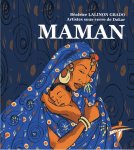
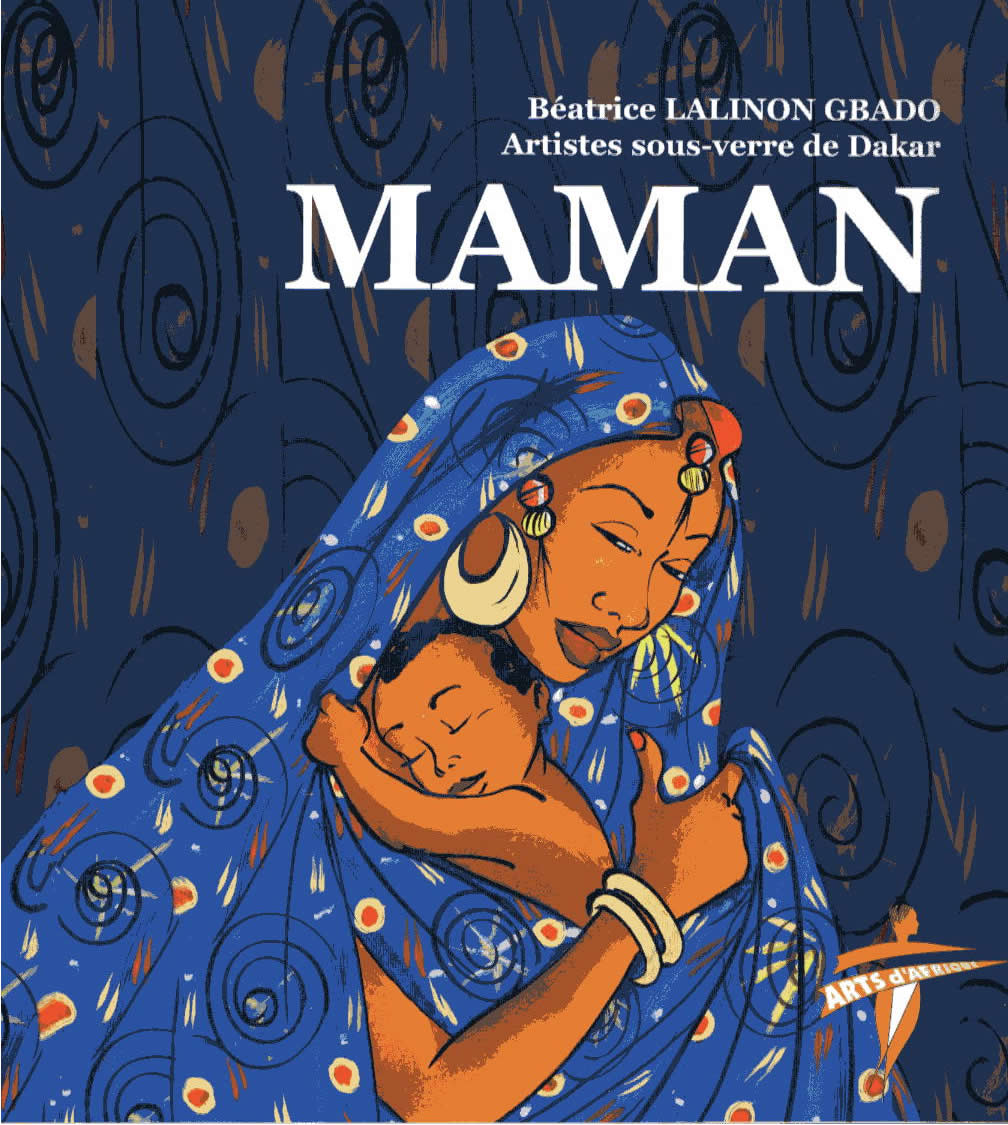
Maman

Author(s) : Béatrice LALINON GBADO ; Mamadou Wolid NIANG, Ousseynou SAKHO, Abdoulaye SECK, Ibrahima DIA, Chérif DIOP
Publishing countries : Benin, Burkina Faso, Ivory Coast, Senegal, Congo Brazzaville
Language(s) : French
Price : 15 euros ; 5 000 FCFA

This poetical text, writing by Béatrice LALINON GBADO, is a real homage for Woman, a wonderfull poem illustrated by several senegalese artists working with the technic of “under-glass”.

Year of publication : 2006,
48 pages,
24 X 24 cm

Share this article

Festins de la détresse

Author(s) : Aminata SOW FALL
Publishing countries : Benin, Burkina Faso, Cameroon, Ivory Coast, France, Mali, Morocco, Senegal, Switzerland
Language(s) : French
Price : 18 €

Chronicles of a family and a court, Festins de la détresse, plunges us into a portrait of lives that fall victim to changes in economic and social conditions, often too rapid for one human life to adapt to. Drawing from the complex tradition of African song, Aminata Sow Fall wants “to change the belief according to which food and material goods are the only things necessary to survival, and to highlight the importance of creativity and spiritual needs. These needs are even more important than material goods, which are not a sufficient basis for the dignity of a human being”.

Year of publication: 2005,
160 pages,
14,5 X 22 cm

Collection Terres d’écritures

The collection “Terres d’écritures” welcomes popular, literary and poetry creations co-published by publishers from the North and the South. Co-publications in this collection are labeled “Le Livre équitable” (Fair Book label).

Share this article

La maison-monde (The House-World)

Author(s) : François-Xavier VERSCHAVE
Publishing countries : Benin, Burkina Faso, Ivory Coast, France, Gabon, Morocco
Language(s) : French
Price : 15 €

Fernand Braudel, who died in 1985, revolutionized the way we conceive and write history. Using data from such fields as geography, political economics and sociology, he gave the history of humankind a broader perspective. Can Braudel’s work challenge the doctrine of today’s economists and technocrats? By highlighting the relative autonomy of the various levels in the economy as well as the links between them, his analysis sheds light on the current processes of domination. This work updates F-X Verschave’s first book, well-known for its criticism of various digressions in international cooperation.

Year of publication: 2005,
246 pages,
14 X 22 cm

Share this article

As Batalhas da Água

Author(s) : Mohamed Larbi BOUGUERRA
Publishing countries : Angola, Brazil, Guinea-Bissau, Mozambique, Portugal
Language(s) : Portuguese
Price : 15 €

Water has become a major political and geostrategic issue that is discussed in global summits and alternative forums. In fact, this vital resource controls the development of human societies. For some people, it is an ordinary good that should generate profits. For others, it is a common good of humanity with an exceptional symbolic weight in all cultures and all religions. Does water have a price? Is water a right or a need? Is there enough water for everyone despite demographic growth? Is there a water crisis? Will there be water wars tomorrow? Will technical solutions be enough to keep water pollution in check? This work shows that the management and uses of water pose essential questions to people on their way of living, their ethics and their relationship with nature and with the biosphere. It pleads for a water-efficient society and for global, united water management.

Year of publication: 2003,
240 pages

Collection Global Issues

12 francophone publishers deal with different issues on the challenges of globalization (natural resources, development aid, North-South relations, etc.). An international collection for another globalization: “Global Issues” also exists in English and in Portuguese. Short essays, conveying diagnoses and proposals, perspectives for action, accessible to a large public. Bearing the “Le Livre équitable” (Fair Book) label, this collection is subject to fair and solidarity-based trade agreements.

Share this article

Violence of cities

Author(s) : Yves PEDRAZZINI
Publishing countries : Benin, Cameroon, Canada, Ivory Coast, France, Guinea, Mali, Morocco, Switzerland, Tunisia
Language(s) : French
Price : 15 €

In the North as in the South, we like big cities, but we don’t like their violence. A common tendency is to blame the poorest inhabitants for this violence, and then, in order to fight against its spread, to adopt strategies based on strong security measures: our societies are quickly becoming societies of fear. Town planning, already, divides space into fortresses and ghettos. One cannot continue to conceptualize urbanization in police stations: an alternative analysis of the phenomena of urban violence and insecurity is necessary. This can only be done by putting this question in perspective, in the context of the violence of urbanization and globalisation, while also taking into account, the point of view of the poor and particularly among these poor, the “malicious ones”, outsiders, illegal immigrants, criminals, members of gangs.
When everything seems blocked, the “vision of the poor” opens the way to a pacification of urban territories. Against the current obsession with security, a creative dialogue is essential with those that the ruling power blames or distrusts.

This book is addressed to all those who seek to understand the logic of the city, those for whom the city inspires fear and love, who don’t want to give up it, but also to the inhabitants of the extreme districts, even if they are poor and “malicious”, even if the city destroys them more than it protects them. To rebuild cities we can live in, we must disobey the models.

Year of publication: 2004

Collection Global Issues

12 francophone publishers deal with different issues on the challenges of globalization (natural resources, development aid, North-South relations, etc.). An international collection for another globalization: “Global Issues” also exists in English and in Portuguese. Short essays, conveying diagnoses and proposals, perspectives for action, accessible to a large public. Bearing the “Le Livre équitable” (Fair Book) label, this collection is subject to fair and solidarity-based trade agreements.

Share this article

Gender

Author(s) : Raja BEN SLAMA ; Drucilla CORNELL ; Geneviève FRAISSE ;LI Xiao-Jian ; Seemanthini NIRANJANA ; Linda WALDHAM
Publishing countries : South Africa, China, United States, France, India, Lebanon, Morocco
Language(s) : English , Arabic , French , Portuguese
Price : 12,5 €

Year of publication: 2004,
154 pages,
12,5 X 19 cm

Collection Keywords

These philosophical or anthropological terms have acquired a symbolic weight crystallizing changes and distinctive features in a given society. Buried in the most run-of-the-mill usage, they also found and organize a shared language that reflects the debates crisscrossing contemporary societies.

These books attempt to revive an intellectual tradition of critical vigilance and openness, while benefiting from a “view from afar” that encourages dialogue between cultures. The reader can thus gauge the similarities, shifts and disparities that each of these “universal” notions covers, along with the tensions that exist between the diversity of cultural traditions and the homogenizing work of globalization.

Share this article

Governance

Translators

Nathalie COOREN (French-Spanish)

JPEG - 36.3 KiB

Nathalie Cooren has a background in law (Master of Laws with a specialisation in European and international law) and in social sciences (Master in sociology of conflicts). After working several years in the field of international relations, where translation was an integral part of her daily life, she decided to make it her full-time job.
Several years spent abroad, particularly in Latin America, also made her aware of the importance of languages and the diversity of cultures. She translates from Spanish and English into French, for documents in the legal, institutional, political, environmental, tourism, marketing, and publishing fields, as well as books (see in particular "Guide du municipalisme : pour une ville citoyenne apaisée, ouverte”).

Danielle CHARONNET (French-Spanish)

JPEG - 35.3 KiB

Rachel MATTEAU MATSHA (French-English)

JPEG - 31.7 KiB

Rachel Matteau Matsha is senior lecturer at the Durban University of Technology (South Africa). Her research interests include book history, sociology of literature, Indian Ocean studies, and postcolonial studies. Born in Québec (Canada), she holds a BA in Literary Studies from the Université du Québec à Montréal, and a MA and PhD in African Literature from the University of the Witwatersrand in Johannesburg (South Africa). She is the author of Real and Imagined Readers. Reading, publishing and censorship under apartheid (UKZN Press, forthcoming 2018). She is collaborating with the International Alliance of independent publishers since 2013.

Share this article

Volunteers

Volunteers come from time to time to support the permanent team of the Alliance for the implementation of the action plan of the association: we thank them very much for their involvement and their commitment!

Céline ANFOSSI
Céline Anfossi is specialised in project management and consultancy. She has worked in the book sector, mainly in coaching professionals (International Alliance of independent publishers, Fill-Interregional Federation of Books and Reading). She explores these issues through different projects and audiences (women seeking employment, students) and is particularly interested in the topic of professional integration.

Djamilatou DIALLO

JPEG - 6.5 KiB

Born in Tahiti, of Franco-Guinean parents, Djamilatou continued her studies in Paris in Lettres et Histoire (MA dissertation on Ancient History: “Patrons of cities in Roman Africa from the third to the fifth century: an epigraphic study”).
In the long term, Jamilatou would like to specialise in the protection and enhancement of heritage by working with different cultural organisations here or elsewhere.
Following a five-month internship at the Alliance (development of the 2018 WomenList and the HotList presented at the Frankfurt Book Fair, and the study on the textbook market in French-speaking Africa), Djamilatou is now a volunteer of the Association.

Share this article

International Committee of Independent Publishers (ICIP)

The ICIP includes the coordinators of the Alliance’s language networks; they are nominated by the members of the networks. Since 2011, the ICIP has been an essential part of governing the Alliance, representing the voice of the publishers. The ICIP meets once a year in the presence of the Board and the team of the Alliance. The agenda is based on the aspirations and objectives of the Alliance, considering above all the needs and expectations of the members.

Composition of the ICIP:

  • Coordinator of the Arabic-language network: Samar Haddad, Syria (Atlas Publishing)
  • Coordinators of the English-language network: Ronny Agustinus, Indonesia (Marjin Kiri) and Colleen Higgs, South Africa (Modjaji Books)
  • Coordinator of the Persian-language network: Azadeh Parsapour, UK/Iran (Nogaam)
  • Coordinators of the Portuguese-language network: Carla Oliveira, Portugal (Orfeu Negro) and Sandra Tamele, Mozambique (Trinta Zero Nove)
  • Coordinator of the Spanish-language network: Francisca Muñoz Méndez, Chile (Editoriales de Chile)

Share this article

Publishers

Click here to see the list of Alliance member publishers.

Share this article

Send this page